Every Ethiopian journey passes through Addis Ababa, and most travellers treat it as a layover. Mistake. Africa's diplomatic capital is home to humanity's most famous ancestor, a coffee culture Italy would envy, the continent's best jazz scene and a market the size of a city district. Give it the two days it deserves — here they are, hour by hour.
Key facts
- Altitude
- 2,355 m — Africa's highest capital
- Airport
- Bole (ADD) — Ethiopian Airlines' global hub
- Must-sees
- Lucy, Holy Trinity, Merkato, Entoto, jazz at Fendika
- Getting around
- Ride app (Ride/Feres) ~US$2–5 per hop
- Time needed
- 2 days bookending a northern circuit
- Coffee
- Best macchiato culture on the continent
Day one: origins and emperors
Morning. Start at the National Museum to meet Lucy — 3.2 million years old, four feet tall, the skeleton that moved humanity's cradle to Ethiopia. Twenty minutes' walk up through the university campus, the Ethnological Museum occupies Haile Selassie's former palace: keep his preserved bedroom for last. Lunch at Lucy Restaurant's garden beside the museum, or grab a beyaynetu buffet with the office crowd on Arat Kilo.
Afternoon. Holy Trinity Cathedral — burial place of Haile Selassie and Sylvia Pankhurst, stained glass and carved thrones, imperial Ethiopia distilled into one building. Then ride up Entoto: eucalyptus forest, Menelik II's first palace, thin air and the whole smoky bowl of the city below. Entoto Park's boardwalks make it an easy sunset.
Night. Traditional first night: Yod Abyssinia or Totot — full injera theatre with azmari musicians and shoulder-dancing (eskista) you will be pulled into. Sleep early; the altitude is real.
Day two: markets, murals and jazz
Morning. Merkato — reputedly Africa's largest open-air market — with a guide (arrange via your hotel; ~US$20): recycled-goods lanes where truck tyres become sandals, the spice rows, the chaotic genius of it. Keep valuables minimal. Decompress with a macchiato at Tomoca (since 1953, stand-up bar, best US$0.50 coffee of your life).
Afternoon. Choose your Addis: contemporary art at Zoma Museum (mud-and-straw architecture as artwork) or the Marxist-era murals and history at the "Red Terror" Martyrs Memorial — small, harrowing, important. Coffee-shop pause in leafy Kazanchis or the Bole cafés.
Night. Ethio-jazz was invented here and still lives at Fendika Azmari Bet in Kazanchis — Mulatu Astatke's heirs, raw and brilliant, shows most nights. This, not the airport lounge, is the correct last memory of Ethiopia.
Logistics
- Airport: Bole (ADD) is 8 km from the centre; official taxis ~US$10–15 or ride apps half that. Most nationalities can get the e-visa online — see our visa guide.
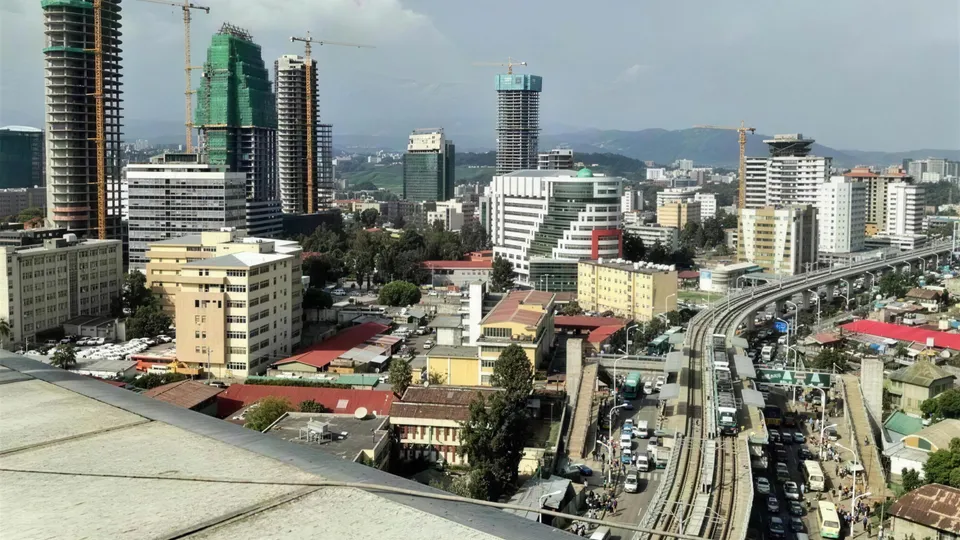
- Getting around: download Ride or Feres (local Ubers) — cheap, honest, cashless-ish. The light rail is a cultural experience; rush hour is not.
- Sleeping: Bole for convenience (Hyatt Regency to US$40 guesthouses), Kazanchis for nightlife walkability, Piazza for faded charm.
- Altitude & pace: 2,355 m — drink water, skip the second tej on night one.