Eight hundred years ago, a king looked at a mountain of red volcanic rock and ordered it carved — downward — into a new Jerusalem. The result is the most extraordinary religious site in Africa: eleven churches hewn from single pieces of living rock, still in daily use, still filled with incense and chant before sunrise. This guide covers exactly how to visit in 2026 — fees, routes, festivals and the mistakes to avoid.
Key facts
- Location
- Amhara Region, northern Ethiopia (2,630 m)
- Entrance fee
- US$50 (5-day pass, all 11 churches)
- Getting there
- Daily flights Addis Ababa → Lalibela (~1 hr)
- Time needed
- 2 full days minimum
- Best months
- October–March; Genna (7 Jan) & Timkat (19–20 Jan)
- UNESCO status
- World Heritage since 1978
Why Lalibela is unlike anywhere else
Most ancient monuments are built up. Lalibela was excavated down — masons began at ground level and chiselled forty, fifty feet into the rock, freeing each church from the mountain like a sculpture from marble. King Lalibela commissioned the complex in the late 12th century as a "New Jerusalem" after Muslim conquests made pilgrimage to the Holy Land dangerous. The names still map the geography of the Holy Land: the channel running through the site is the River Jordan, and the hill above is Mount Tabor.
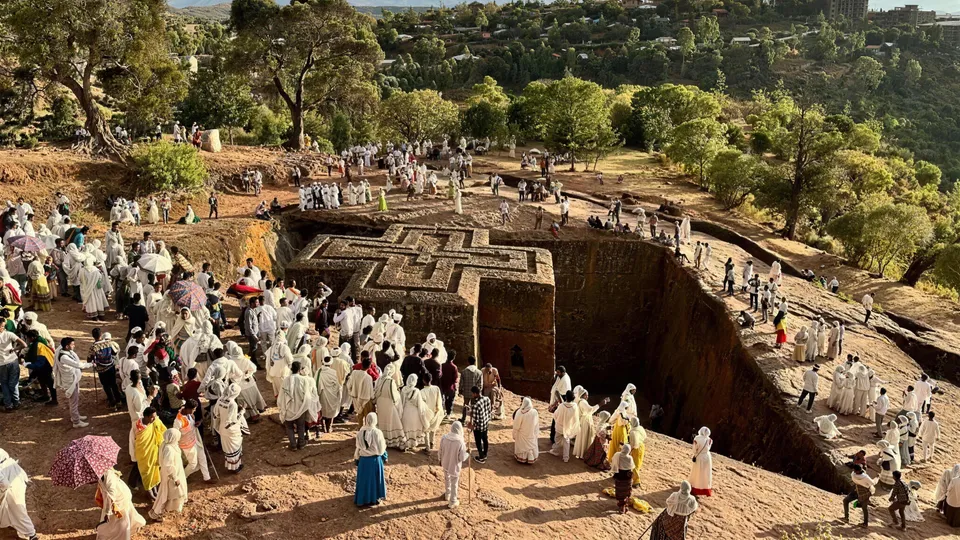
Crucially, this is not an archaeological park. It is a living shrine of the Ethiopian Orthodox Tewahedo Church. Priests hold services at dawn, hermits live in wall niches, and on feast days the trenches overflow with pilgrims wrapped in white gabi shawls. Arrive at 6am at least once — it will be the memory you keep.
The two clusters and Bete Giyorgis
The eleven churches divide into a northern group of six, a southeastern group of four, and — standing alone — Bete Giyorgis (the Church of St George), the cross-shaped icon you've seen in every photograph. Carved as a Greek cross in a 15-metre-deep pit, it's the best preserved of all because it never needed the protective (and unlovely) UNESCO shelters that cover several others.
- Northern group: Bete Medhane Alem (the largest monolithic church on Earth, held up by a forest of columns), Bete Maryam with its faded frescoes, the twin churches of Golgotha-Mikael containing what tradition holds is King Lalibela's tomb.
- Southeastern group: Bete Amanuel — the finest carving of all with its Aksumite window bands — Bete Merkorios reached through a pitch-dark 35-metre tunnel (tradition: walk it as a passage from hell to heaven), Bete Abba Libanos, carved into a cliff face.
- Bete Giyorgis: save it for last, at golden hour, viewed first from the rim.
A two-day route that works
Day one, 8am: northern group with a guide (3–4 hours), lunch in town (try Ben Abeba's surreal architecture or Seven Olives), afternoon rest — you're at 2,630 m and will feel it — then Bete Giyorgis rim at 5pm.
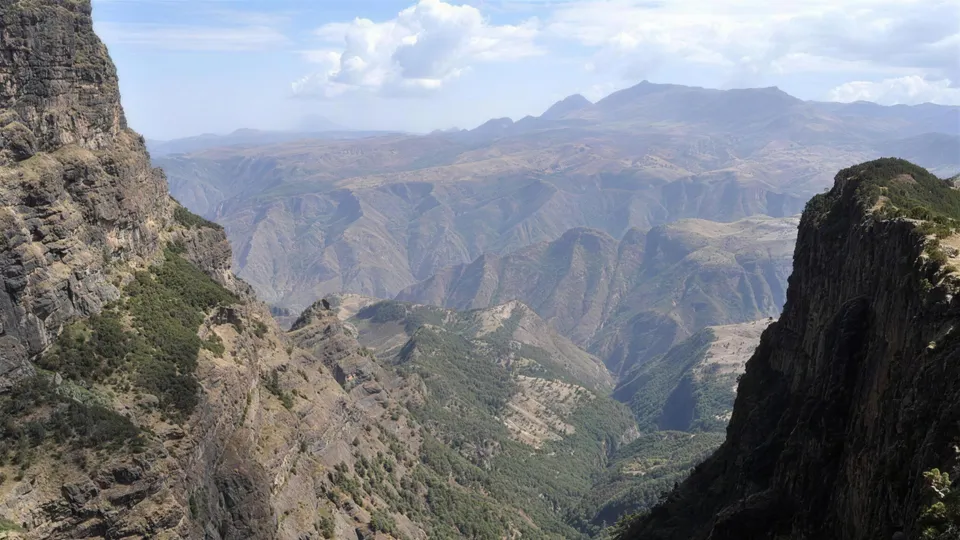
Day two, 6am: attend part of a morning service at Bete Maryam (stand quietly at the back), breakfast, then the southeastern group including the Merkorios tunnel. In the afternoon, take a mule or 4x4 up to Asheton Maryam, a monastery carved near a 3,150 m summit with vast views over the Lasta mountains — or visit Yemrehanna Kristos, a jewel-box church built (not carved) inside a cave 40 km north.
Getting there and where to stay
Ethiopian Airlines flies Addis Ababa → Lalibela daily (about one hour); book domestic legs on the same ticket as your international flight for roughly half price. The airport is 23 km from town; hotels arrange transfers (~US$10). By road it's a spectacular but punishing two-day drive from Addis — only worth it as part of a full northern-circuit overland trip.
Stay close to the churches: Sora Lodge, Mezena Lodge and Zan-Seyoum offer valley views around US$60–100; Maribela and Old Abyssinia are solid mid-range picks. Budget guesthouses in town run US$15–30. Book months ahead for January.
Fees, dress and etiquette
The US$50 ticket (bring cash-clean US dollars or pay in birr) is checked at each cluster, so keep it on you. Shoulders and knees covered; shoes off at every church — bring slip-ons and thick socks, and a small torch for the tunnels. Photography is allowed without flash; always ask before photographing priests, and expect to tip (Br 50–100) if a priest displays a processional cross for you. Drone flying is prohibited.
Festivals: the Lalibela you came for
Genna (Ethiopian Christmas, 7 January): up to 100,000 pilgrims, all-night vigils, the hillsides white with gabi-wrapped worshippers at dawn. Timkat (19–20 January): processions of the tabot (replica Ark tablets) under sequined umbrellas. Both are overwhelming in the best way — but flights, beds and guides must be locked in by September.
Compare tours
Is Lalibela safe to visit right now?
Lalibela sits in the Amhara region, where the security situation has fluctuated since 2023. Flying in and out (rather than overlanding) has remained the standard, sensible approach whenever the town is receiving visitors. Before booking, check your government's current travel advisory and ask a recent traveller or trusted local operator — conditions change faster than guidebooks. The town itself is small, friendly and used to guests; ordinary precautions apply.