There is a place where the Earth is being torn apart in real time — where three tectonic plates pull away from each other, the ground sinks below the sea, salt plains run to the horizon, springs bubble neon yellow with acid, and a volcano holds a lake of molten rock. It is the hottest inhabited place on the planet, and the Afar people who live here have mined its salt for a thousand years. Visiting is a genuine expedition. Here is exactly how it works.
Key facts
- Location
- Afar Region, northeastern Ethiopia
- Elevation
- Dallol sits ~125 m BELOW sea level
- Temperature
- Hottest inhabited place on Earth — 34–50°C
- Tour base
- Mekele (fly from Addis, ~1.5 hr)
- Typical tour
- 2–4 days, 4x4 convoy, ~US$400–700
- Season
- November–February only (heat is dangerous otherwise)
What you actually see
A classic Danakil circuit strings together four otherworldly sites:
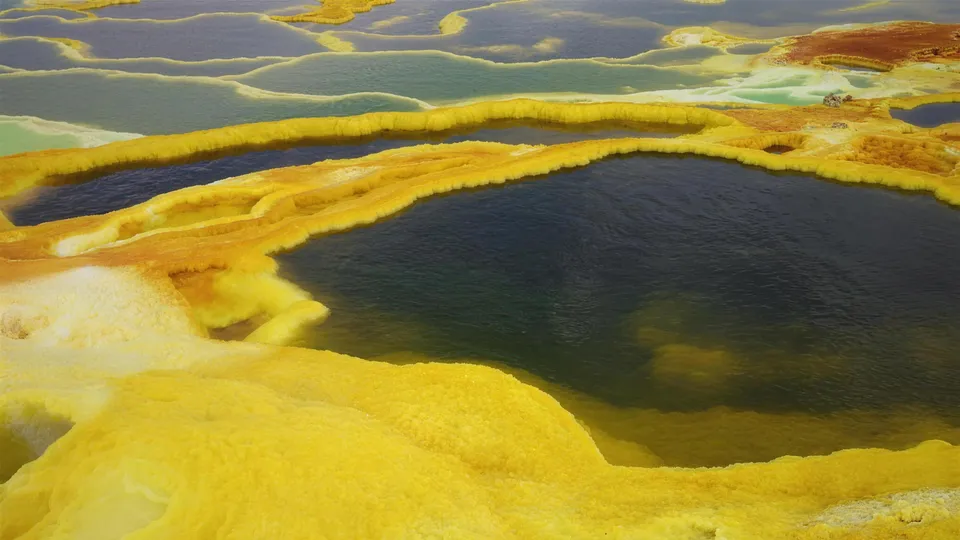
- Dallol — a hydrothermal field on a salt dome, painted in colours that look Photoshopped: sulfur yellow, oxide green, rust orange. You walk (carefully, with your guide) between acid pools and salt chimneys. There is nowhere else like it on Earth.
- Lake Asale salt flats — a blinding white plain where Afar and Tigrayan miners still cut salt slabs (amole, once currency) by hand and load them onto camel caravans that walk days to market.
- Lake Afdera / Karum — hypersaline lakes where you can float like the Dead Sea, with a hot spring to rinse off.
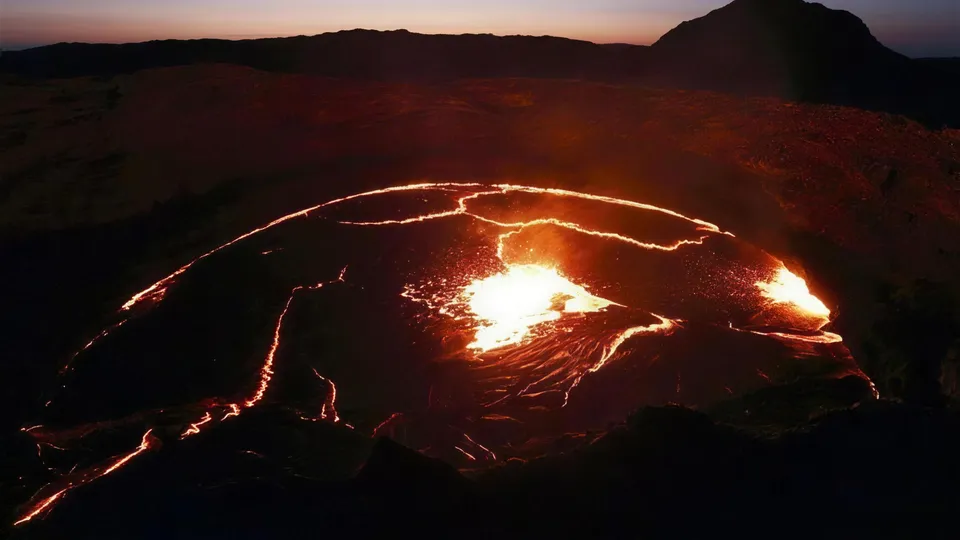
- Erta Ale — the "smoking mountain": a shield volcano with a persistent lava lake in its summit crater. You drive to a base camp, climb 2–3 easy hours after dark to avoid the heat, sleep on mats at the rim, and look into the crater at dawn.
How tours work
Independent travel is not possible — permits, armed escorts and local Afar guides are mandatory, so everyone joins an organised 4x4 convoy. Tours depart from Mekele (fly from Addis Ababa in about 90 minutes). The standard formats:
| Tour | Nights | Covers | Typical price |
|---|---|---|---|
| Short | 1 | Dallol, salt flats, caravans | US$400–500 |
| Classic | 2–3 | + Erta Ale summit night | US$600–800 |
| Extended | 3–4 | + Afdera float, extra desert camps | US$750–950 |
"Camps" means mattresses under the stars on raised wooden beds, simple meals cooked by crew, no showers. It is basic and it is glorious.
Choosing an operator (this matters more than anywhere)
Your operator is your water supply, your vehicle quality and your safety margin. Green flags: runs departures weekly in season, two spare tyres and satellite phone per convoy, explicit water ration (4+ litres/person/day), Afar guides from the communities you pass through. Red flags: prices 40% below everyone else, vague answers about escorts, single-vehicle "convoys". Ask directly: "When did your last trip run, and what did Erta Ale's lake look like?"
When to go and what to bring
Tours run November to February, when daytime highs are a survivable 34–38°C. Outside these months the Depression regularly exceeds 45°C and reputable operators stop running. Bring: broad hat, sunglasses, electrolyte sachets, closed shoes with thick soles (the salt crust is sharp and hot), headtorch for the night climb, and a light sleeping-bag liner. Leave drones at home unless your operator has arranged permits.
Fitting Danakil into a bigger trip
The natural pairing is the northern historical circuit: fly into Mekele for Danakil, then continue to the Tigray rock churches, Axum and Lalibela. Danakil is the adrenaline chapter of that story — the highlands are the soul.