For two centuries, while Europe was fighting its wars of religion, a city of castles ruled the Ethiopian highlands. Gondar was court, capital and stage for emperors who built in stone on a scale Africa hadn't seen since the pharaohs — and then painted heaven onto a church ceiling nearby. Most travellers give it half a day on the way to the Simiens. Give it a full one; here's how to spend it.
Key facts
- Location
- Amhara Region, 2,133 m; 1-hr flight from Addis
- Star sights
- Fasil Ghebbi, Debre Birhan Selassie, Fasilides' Bath
- Entrance
- Fasil Ghebbi ~Br 200–400 foreigners; church Br 100–200
- Time needed
- One full day (two if pairing with Simiens)
- Founded
- 1636 by Emperor Fasilides
- Signature event
- Timkat at Fasilides' Bath (19–20 Jan)
Fasil Ghebbi: the Royal Enclosure
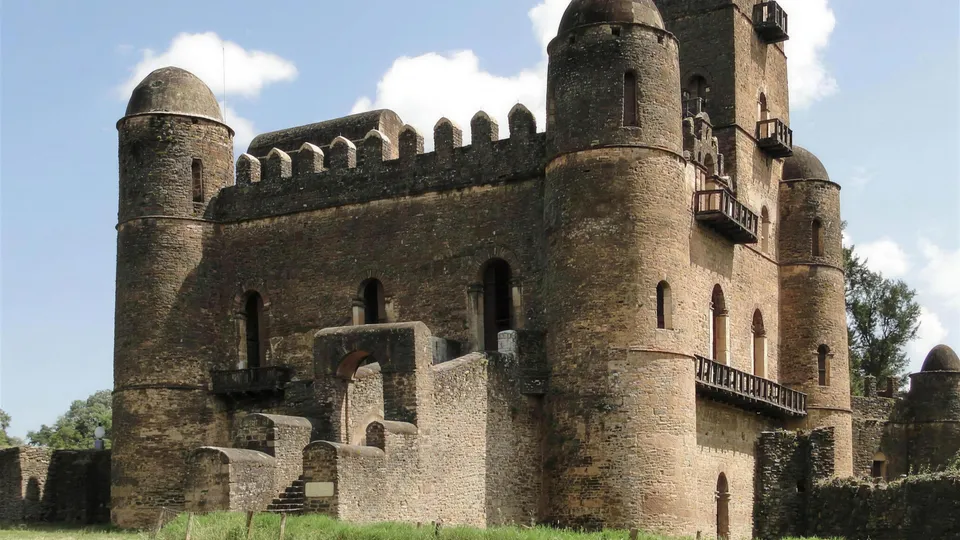
Start at the 70,000-square-metre walled compound at the city's heart, a UNESCO site since 1979. Fasilides' Castle (1640s) is the showpiece — parapets, domed towers and egg-stone walls glowing amber in the afternoon. Around it stand Iyasu I's palace (once "finer than Solomon's house", said a chronicler, before an earthquake and British bombs in 1941 got at it), Dawit III's Hall of Song where court musicians performed, Mentewab's castle, a lion house, a library and a sauna-like steam bath. Hire a licensed guide at the gate (~Br 500–700 for the compound): the buildings don't explain themselves, and the dynastic soap opera — poisonings included — is half the fun.
Debre Birhan Selassie: the painted heaven
Ten minutes' drive northeast, behind a modest stone wall (tradition says a swarm of bees turned back the Mahdist army that burned every other Gondar church in 1888), waits the most famous ceiling in Africa: rows of dark-eyed, winged cherub faces gazing down between beams. The walls carry a complete painted gospel — a crowned Trinity, saints, martyrdoms, a smoking Devil. Shoulders and knees covered; Br 100–200 entry; mornings quieter.
Fasilides' Bath and the rest of the day
Two kilometres from the enclosure, the emperor's sunken bathing palace sits in a walled garden strangled — beautifully — by banyan roots. Empty most of the year, it's serene rather than spectacular until Timkat (19–20 January), when it becomes the epicentre of Ethiopian Orthodoxy's greatest festival. Round out the day with the ruined hilltop palace of Empress Mentewab at Kuskuam (sweeping views, few visitors) and a macchiato on a Piazza café terrace — Gondar does Italy's coffee legacy proud.
Practicalities
- Getting there: daily 1-hour flights from Addis; the airport is 18 km south of town.
- Sleeping: Goha Hotel for the sunset view over the city; Mayleko Lodge near the airport for garden calm; solid guesthouses in the Piazza area from US$25.
- Eating: Four Sisters (traditional dinner + music, tourist-friendly done right), The Kave for grilled meat with locals.
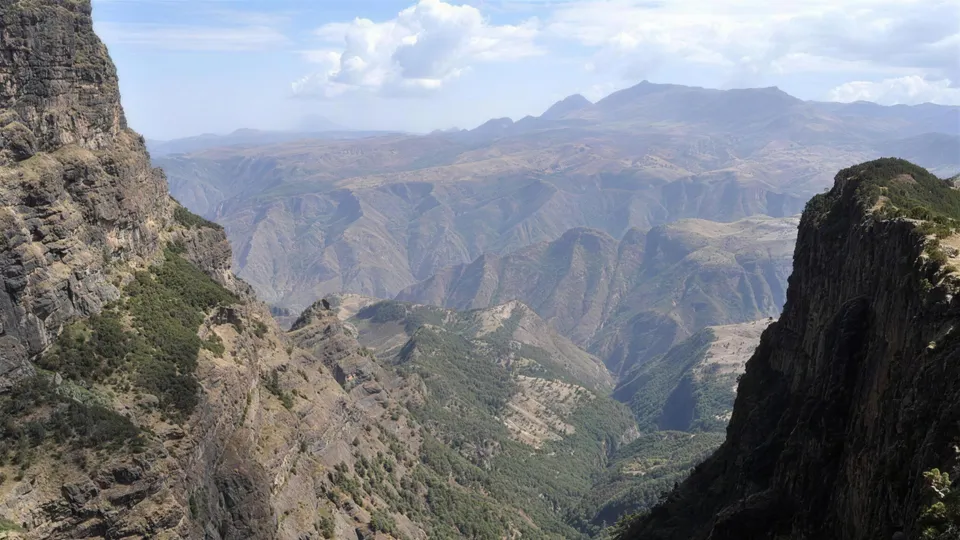
- Combining: Gondar is the gateway to the Simien Mountains (3 hrs to the park) — pair a castle day with a trek, exactly as the 10-day itinerary does.