Ethiopia is one of the few countries where a handful of words genuinely changes your trip. Not because you need them — English will carry you through Addis and any hotel — but because the response to a foreigner attempting Amharic is so disproportionately warm that it feels like a trick. Learn ten phrases on the flight and you will spend two weeks being told, with obvious delight, that your Amharic is excellent. It will not be. Say them anyway.
Key facts
- Script
- Ge'ez (fidel) — 200+ characters, syllabic
- The one word to learn
- ሰላም — selam (hello, peace, goodbye)
- Thank you
- አመሰግናለሁ — ameseginalehu
- Gendered verbs
- Endings change for men (-h) and women (-sh)
- English reach
- Widely spoken in Addis, thin in rural areas
- Other languages
- Oromo, Tigrinya, Somali, Afar + 80 more
Start with these five
If you learn nothing else, learn these. They cover perhaps eighty percent of the moments that matter.
- ሰላም — selam — hello / peace / goodbye. Universal, all ages, all situations.
- አመሰግናለሁ — ameseginalehu — thank you. A mouthful; worth the effort. Short version: እgziabher yistilign ("God repay you") is warmer still.
- ይቅርታ — yiqirta — sorry / excuse me. Also how you get past someone in a crowd.
- እሺ — eshi — OK / fine / agreed. You will hear this constantly; use it constantly.
- አይ፣ አመሰግናለሁ — ay, ameseginalehu — no, thank you. Said with a smile, it closes almost any sales approach.
Greetings, and the gender rule
Amharic changes verb endings by gender and seniority. The pattern is simple once seen:
- ደህና ነህ? — dehna neh? — how are you? (to a man)
- ደህና ነሽ? — dehna nesh? — (to a woman)
- ደህና ኖት? — dehna not? — (to an elder or in formal respect)
- ደህና ነኝ — dehna negn — I'm fine (the answer, always)
- እንደምን አደርክ / አደርሽ — indemin aderk / adersh — good morning (m/f)
-h for men, -sh for women, -ot for respect. When in doubt use -ot. Greetings in Ethiopia are not a formality to rush — expect a full exchange of "how are you / how is the family / how did you sleep" before any business begins. Cutting it short is the actual rudeness, not mispronunciation.

Money and markets
- ስንት ነው? — sint new? — how much is it?
- ውድ ነው — wud new — it's expensive. The opening move, said cheerfully.
- ቀንስልኝ — qenslign — reduce it for me. The polite bargaining verb.
- የመጨረሻ ዋጋ? — yemecheresha waga? — last price?
- አልፈልግም — alfeligim — I don't want it. Firm, not rude.
- ብር — birr — the currency. Numbers: and (1), hulet (2), sost (3), arat (4), ammist (5), siddist (6), sebat (7), simmint (8), zeteñ (9), asir (10), meto (100), shi (1,000).
Bargaining is expected in markets and with taxis, not in restaurants, hotels or shops with marked prices. A ride-hailing app removes the negotiation entirely, which is often worth more than the sport of it.
Food and coffee
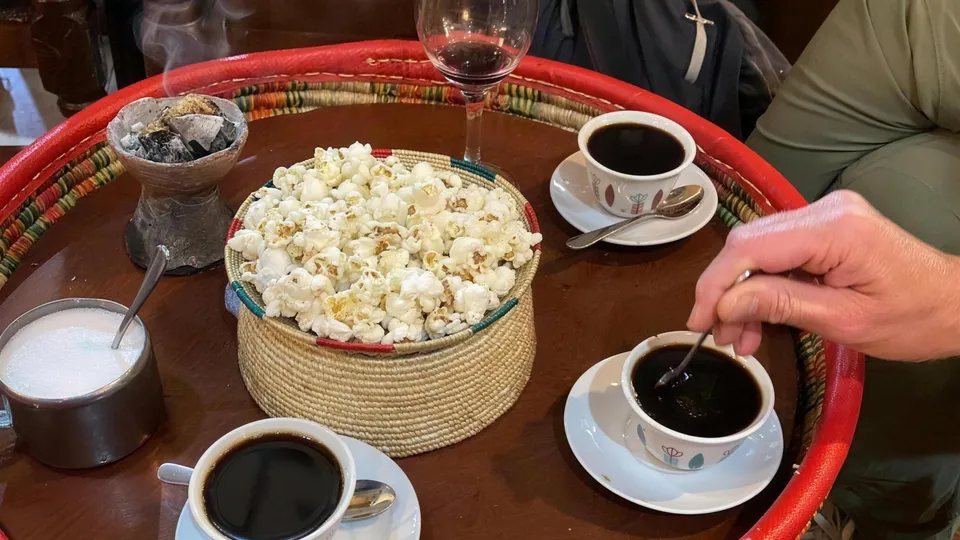
- ቡና — buna — coffee. The most useful noun in the language.
- ውሃ — wuha — water. Yatashagera wuha — bottled water.
- ጾም ነው — tsom new — it's fasting (i.e. vegan). Say this to be served the vegetarian platter — the single most useful phrase for vegetarians in Ethiopia.
- ሥጋ የለም — siga yelem — no meat.
- ጣፋጭ ነው — tafach new — it's delicious. Deploy generously; it is always well received.
- በቃኝ — bekagn — I've had enough. You will need this. Ethiopian hospitality does not accept a full plate as an argument.
- ሂሳብ — hisab — the bill.
Tsom new deserves emphasis: because Orthodox fasting excludes all animal products, "fasting food" is accidentally the best vegan cuisine in Africa, and every restaurant understands the request. See our food guide.
Getting around
- የት ነው? — yet new? — where is it?
- ወዴት? — wedet? — where to? (what a driver asks you)
- እዚህ አቁም — izih aqum — stop here.
- ቀጥታ — qetita — straight on. ግራ gira (left), ቀኝ qegn (right).
- መጸዳጃ ቤት የት ነው? — metsedaja bet yet new? — where is the toilet?
- አልገባኝም — algebagnim — I don't understand.
- እንግሊዝኛ ትችላለህ? — English tichilaleh? — do you speak English?
Words you will hear aimed at you
ፈረንጅ — ferenj — foreigner. From "Frank", a crusader-era word. It is almost never hostile; children shout it with delight. Responding with selam! rather than irritation turns it into a nice moment.
አይዞህ / አይዞሽ — ayzoh / ayzosh — "be strong, take heart" (m/f). Said constantly, for everything from a stumble to a bereavement. One of the loveliest words in the language.
ቆይ — qoy — wait. ና — na — come. ተው — tew — stop it / leave it, useful for persistent touts.
Three notes on the script
Amharic is written in fidel, the Ge'ez syllabary: each of 33 base characters has seven vowel forms, giving 230-odd symbols. You will not learn it in a fortnight, and you do not need to — but recognising a handful (ቡና for coffee, ሆቴል for hotel, ባንክ for bank) makes signage suddenly legible.
Note too that Ethiopia runs on its own calendar and clock — the year is seven or eight behind, and the day starts at dawn, so "three o'clock" locally means nine in the morning. That single fact prevents more missed appointments than any phrase on this page.
Finally: pronunciation is forgiving, but Amharic has ejective consonants (the q in qegn, the ts in tsom) that have no English equivalent. Approximate them confidently. Nobody is grading you, and everybody is on your side.