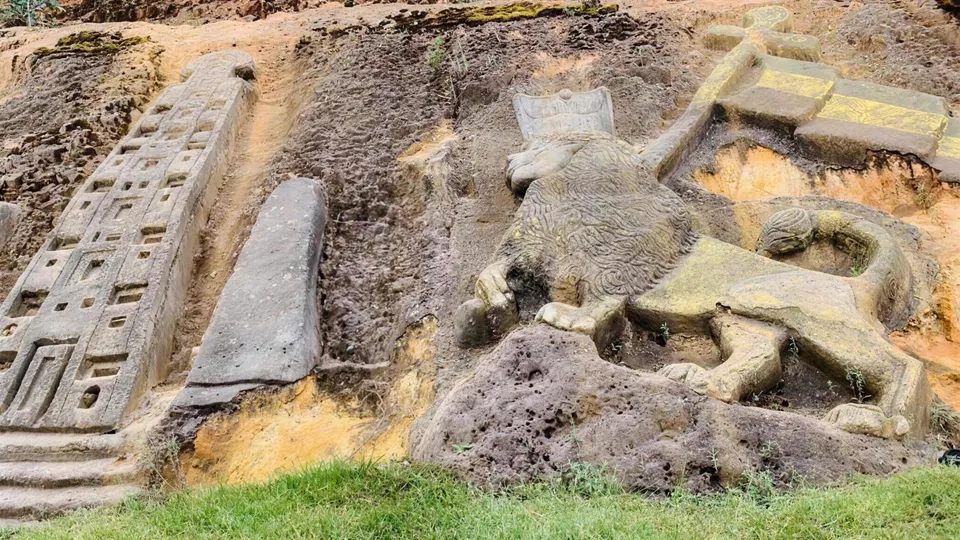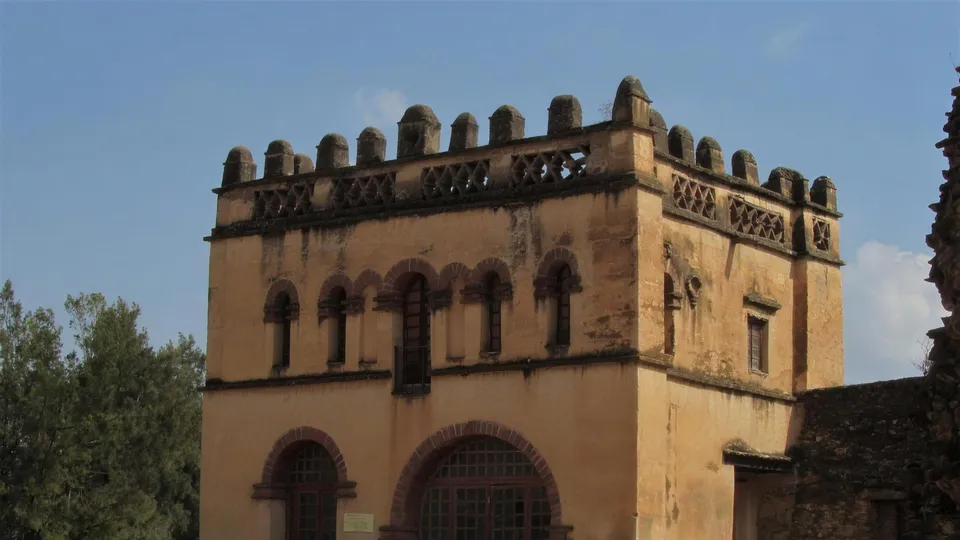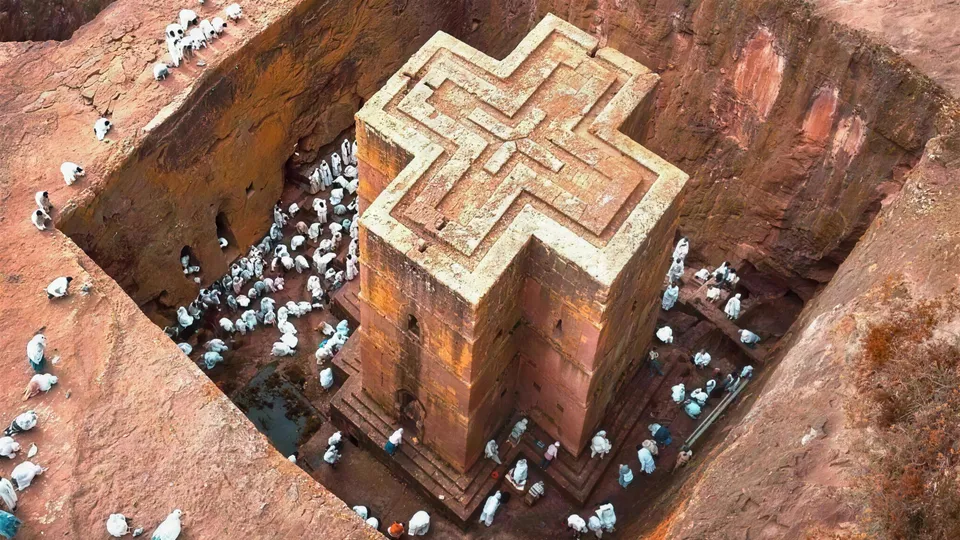
Eight centuries ago a king carved a new Jerusalem downward into red rock, and Lalibela remains the most extraordinary place of worship in Africa — eleven churches hewn from living stone, still filled with chant before dawn. A good tour does more than tick the famous cross-shaped church: it adds a cave church in the hills and a monastery near the clouds. Here's how to book Lalibela well.
Key facts
- Main tour
- Guided visit of the 11 rock-hewn churches (2 clusters)
- Entrance
- US$50, 5-day pass, all churches; guide ~US$20–30/day
- Best day trip
- Yemrehanna Kristos cave church (~90 min drive)
- Best half-day hike
- Asheton Maryam monastery (~3,700 m)
- Getting there
- Daily flights Addis → Lalibela (~1 hr)
- Time needed
- 2 days for the churches; +1 for day trips
Touring the rock-hewn churches
The heart of any visit is a guided tour of the two church clusters — the northern group (including Bete Medhane Alem, the largest monolithic church on Earth) and the southeastern group with its tunnels — plus the free-standing, cross-shaped Bete Giyorgis. Two days lets you take the northern group in soft morning light, the southeastern group and a dawn service the next day, and Bete Giyorgis at sunset. Deeper detail, fees and etiquette are in our complete Lalibela guide.
The two great day trips
- Yemrehanna Kristos (~90 min NE): a jewel-box church built inside a cave, older than Lalibela's and built rather than carved — an Aksumite masterpiece in wood and stone. Half-day with a driver.
- Asheton Maryam (above town, ~3,700 m): a 13th-century rock-hewn monastery reached on foot or by mule, with sweeping Lasta-mountain views — a rewarding half-day hike.
Further afield, some itineraries add the cliff churches of Tigray/Gheralta — see our Axum & Tigray tours page.
Village, market & coffee experiences
Between churches, the experiences travellers remember are the ordinary ones: a coffee ceremony in a village home, the Saturday market, and Lalibela's famous two-storey traditional round houses. Many guides fold these into a full-day tour at no great extra cost — ask.
Getting there & when to go
Ethiopian Airlines flies Addis → Lalibela daily (about an hour); book domestic legs on your international ticket for roughly half price. October–March is dry and clear; for maximum atmosphere, Ethiopian Christmas (Genna, 7 January) fills the churches with up to 100,000 pilgrims — but book flights, hotels and guides months ahead. Bring slip-on shoes (removed at every church), modest dress and a torch for the tunnels. Security in the region has fluctuated in recent years, so check current advice and confirm with a recent traveller or operator before booking.