In the far south of Ethiopia, along a river that never reaches the sea, live some of the most culturally distinct communities in Africa — the Hamar with their ochre-braided hair, the Mursi famed for lip plates, the Karo who paint their bodies in chalk for dances above the river. The Omo Valley is extraordinary, and it is also tourism's hardest ethical test. This guide is about passing it: travelling in a way that is welcomed, fair and unforgettable.
Key facts
- Location
- South Omo Zone, southern Ethiopia
- Hub towns
- Jinka & Turmi (fly Addis → Jinka, ~1.5 hr)
- Communities
- Hamar, Mursi, Karo, Dassanech, Banna, Ari + more
- Typical tour
- 4–7 days private 4x4 with guide
- Budget
- ~US$150–250/day all-in for two people
- Best timing
- Sep–Mar; plan around market days & ceremonies
First, the honest conversation
Omo tourism has a deserved reputation problem: convoys racing between villages for ten-minute photo stops, fees haggled down to insult, culture reduced to costume. But the opposite also exists — travellers who stay days in one area, attend a market as customers not spectators, sit through a coffee with a Hamar family, and leave with something neither side regrets. The valley's communities overwhelmingly want visitors; what they want is respectful, paying, unhurried visitors. Every choice below is designed around that.
Who lives in the valley
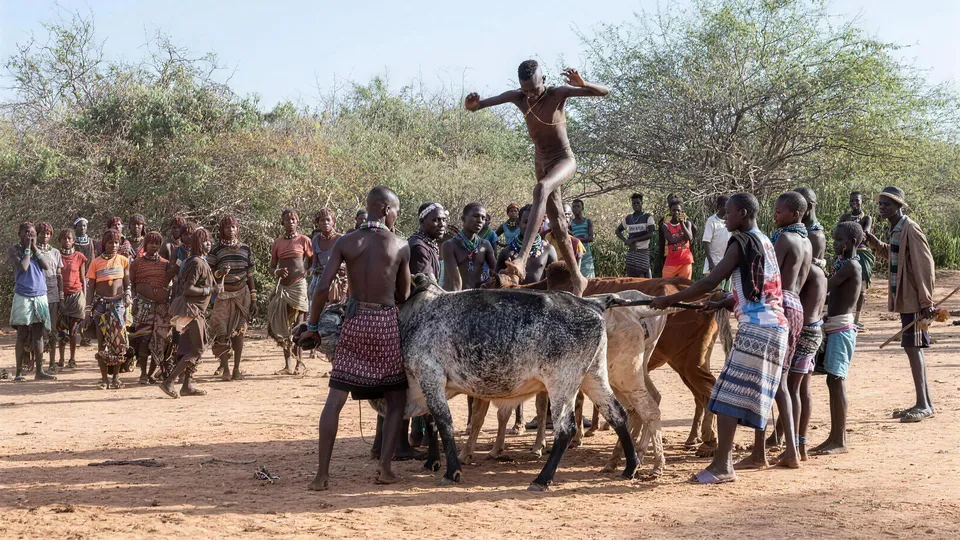
- Hamar — the largest group tourists meet; famous for women's butter-and-ochre hair, the evangadi night dance and the bull-jumping rite. Base: Turmi.
- Mursi — in Mago National Park; known worldwide for women's lip plates. Visits are short and can feel transactional — go early, with a community guide, or consider skipping.
- Karo — smallest population, spectacular body painting, villages on bluffs above the Omo River (Korcho's bend is the valley's best view).
- Dassanech — Delta people near Omorate, reached by dugout canoe across the river.
- Ari & Banna — around Jinka; farming communities where village visits feel most like ordinary hospitality.
Markets are the best days
Weekly markets are where the valley actually meets — Hamar, Banna and Tsemay trading goats, sorghum beer, honey and gossip. As a buyer you have a role, which changes everything. Key ones: Turmi (Mon), Dimeka (Tue & Sat — the best), Key Afar (Thu), Jinka (Sat). Build your route around two of them.
How tours work and what they cost
There is no public transport worth relying on; everyone travels by private 4x4 with a driver-guide from Addis, Arba Minch or Jinka. Flying Addis → Jinka then touring saves two long driving days. A fair benchmark for a private vehicle, driver-guide, fuel and mid-range lodging is US$150–250 per day for two people, plus village entry fees (Br 200–600 per village) and photo fees. A good 5-day shape: Jinka → Ari villages & Jinka museum → Key Afar market → Turmi (2 nights, Hamar area + Dimeka market) → Korcho → Omorate → out.
The etiquette that matters
- Ask before every photograph, pay what's agreed, and accept "no".
- Put the camera away first — greet, sit, buy something, then ask.
- Never hand out sweets, pens or money to children; buy from adults instead.
- Dress modestly; drink the coffee when offered; learn five words of greeting.
- Book through operators who name their community partners — ask directly who gets what.
When to go
September–March is dry and comfortable (hot near the river). April–May rains can cut tracks. For ceremonies, July–September after harvest is richest, but market days run all year — and they, not ceremonies, are the reliable heart of a great Omo trip.