Ethiopia keeps its own time in the most literal sense: a different year, a different number of months, and a clock that starts when the sun comes up. This is not folklore preserved for visitors — it is the working calendar of every school, bank and government office in the country, and misunderstanding it is the single most reliable way for a traveller to miss a flight. Here is how it works, why, and which dates are worth building a trip around.
Key facts
- Year behind
- 7–8 years (2018 EC ≈ 2026 GC)
- Months
- 13 — twelve of 30 days plus Pagume (5–6)
- New Year
- Enkutatash — 11 September (12 in leap years)
- Clock
- Starts at dawn — local 3:00 = 9:00 a.m.
- Christmas
- Genna — 7 January
- Biggest festival
- Timkat — 19 January (20 in leap years)
The year: seven or eight behind
While most of the world reads 2026, Ethiopia reads 2018 — and will until 11 September, when it turns 2019. The difference traces to a sixth-century disagreement over the date of the Annunciation. Rome revised its calculation around AD 500; the Ethiopian Orthodox Church did not, and simply kept counting from the older reckoning. The gap is seven years from 11 September to 31 December, and eight years for the rest of the year.
Practically: your visa, hotel booking and flight all use the Gregorian date, so nothing breaks. But a birth certificate, a school report, a museum plaque or a shop's calendar will use the Ethiopian year — and Ethiopians will often quote it without flagging which system they mean.
Thirteen months, and the one that lasts five days
The Ethiopian year has twelve months of exactly thirty days, plus a thirteenth called Pagume — five days long, six in a leap year — to reconcile the calendar with the solar cycle. The tourism board's old slogan, "thirteen months of sunshine", is a genuine description rather than a marketing invention.
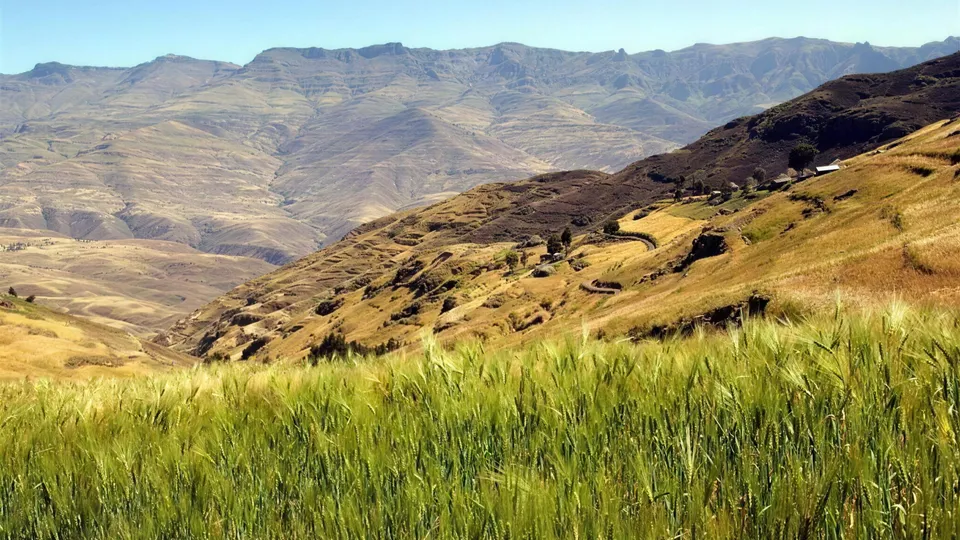
The year begins with Meskerem on 11 September, at the end of the long rains, when the highlands turn yellow with adey abeba daisies. There is a real logic to a new year that starts when the country is greenest.
The clock: the thing that will actually cost you
Ethiopian time counts from dawn, not midnight. Near the equator, where sunrise sits around 6 a.m. all year, this is arguably the more sensible system — hour one is the first hour of daylight.
- 6:00 a.m. Western = 12:00 Ethiopian
- 7:00 a.m. = 1:00
- 9:00 a.m. = 3:00
- 12:00 noon = 6:00
- 6:00 p.m. = 12:00 (night begins)
Add or subtract six. Airlines, international hotels and tour operators quote Western time; drivers, guesthouses, market traders and your relatives may not. The habit that saves you: when any time is arranged, confirm with "ba-ferenj seat?" — "in foreigner time?" It is a completely normal question and it will save you at least one missed departure.
The festival calendar worth planning around
- Enkutatash — 11 September. New Year. Children sing door to door with bunches of daisies; families gather. Gentle rather than spectacular.
- Meskel — 27 September. The finding of the True Cross, marked by an enormous bonfire (demera) in Meskel Square, Addis. UNESCO-listed and genuinely stirring.
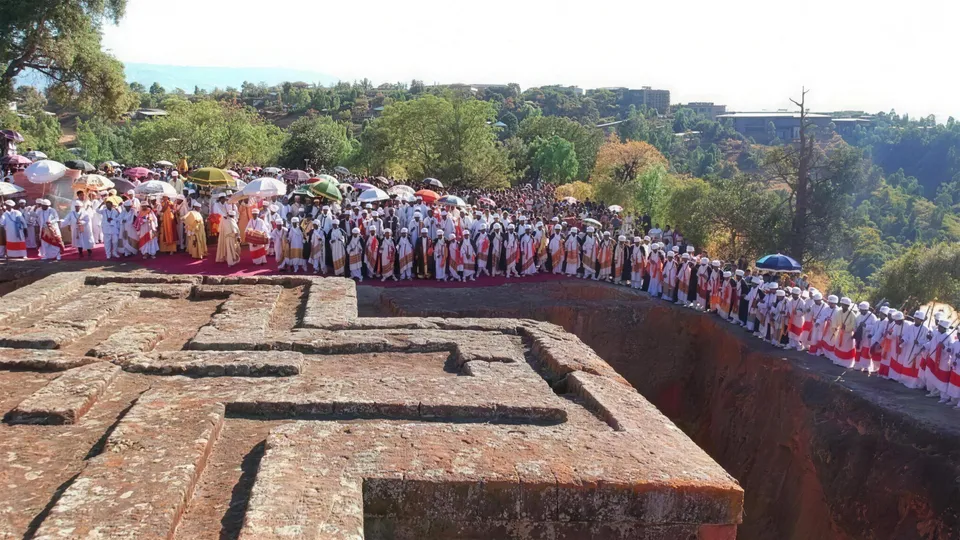
- Genna — 7 January. Ethiopian Christmas, preceded by a 43-day fast. Best experienced in Lalibela, where thousands of white-robed pilgrims fill the rock churches — subject to current advisories.
- Timkat — 19 January (20 in leap years). Epiphany, and the greatest of them all: tabots processed under embroidered umbrellas, all-night vigils, and mass blessing with water the next morning. Gondar's ceremony at Fasilides' Bath is the most photographed spectacle in the country.
- Fasika — movable, Orthodox Easter, after 55 days of fasting. The midnight service and the meal that breaks the fast are the most important family moment of the year.
- Eid al-Fitr and Eid al-Adha — movable. Ethiopia is roughly a third Muslim, and these are national holidays; Harar is the place to see them.
- Irreecha — early October. The Oromo thanksgiving at Lake Hora, Bishoftu. Vast, colourful and far less visited by foreigners.
For Timkat and Fasika, book flights and hotels three to six months ahead. The northern towns fill completely, prices double, and late bookers end up commuting from another town. Our festivals guide covers what actually happens at each; check the current regional advisories before committing to Gondar or Lalibela.
Fasting: the rhythm underneath everything
Orthodox Ethiopians observe some 180–250 fasting days a year, during which no animal products are eaten. Every Wednesday and Friday is a fast day, as is the long Lenten period before Fasika. This shapes daily life more than any festival: restaurant menus shift, meat becomes hard to find in small towns, and the beyaynetu — a platter of vegan stews on injera — becomes the default meal.
For vegetarian and vegan travellers this is unexpectedly excellent news. Ask for tsom (fasting) food and you will be served some of the best plant-based cooking anywhere, understood instantly and without negotiation.
Practical conversions to keep on your phone
- Year: Gregorian − 8 (or − 7 after 11 September) = Ethiopian year.
- Time: Western hour − 6 = Ethiopian hour (and confirm which is meant).
- Dates: Ethiopian months run 11 September, 11 October, 10 November… roughly the 10th–11th of each Gregorian month.
- Business hours: offices typically 8:30–12:30 and 13:30–17:30 Western, closed Sunday; many close early Friday.
- Public holidays close everything — banks, offices, most shops. Build a buffer day around Timkat, Meskel, Genna and Fasika.
Learn the six-hour rule and the September new year, and the rest is charm rather than obstacle. There are not many countries left keeping their own time; Ethiopia does it without apology, and it is one of the quiet pleasures of being here.