If you want to see Ethiopia at its most vivid, plan around the first three weeks of January 2027: Genna (Ethiopian Christmas) on 7 January and Timkat (Epiphany) on 19 January. This guide gives you the confirmed dates, explains what actually happens, compares where to watch in Addis Ababa, Gondar and Lalibela, and walks through the booking, clothing and etiquette points that make the difference — including the travel-advisory facts to check first.
Quick answer
Ethiopian Christmas (Genna) falls on Thursday 7 January 2027 and Timkat (Epiphany) on Tuesday 19 January 2027, with the Timkat eve (Ketera) on 18 January. Timkat is usually 19 January (20 January in Gregorian leap years). The biggest gatherings are in Addis Ababa, Gondar and Lalibela, but Lalibela and Gondar are in the Amhara region, which carries a Do Not Travel advisory, so check your government's advice and insurance cover before booking. Book flights and hotels months ahead.
Key facts
- Genna (Ethiopian Christmas) 2027
- Thursday 7 January 2027
- Timkat (Epiphany) 2027
- Tuesday 19 January 2027; the eve, Ketera, is 18 January
- Rule of thumb
- Timkat is 19 January, or 20 January in Gregorian leap years (next: 2028)
- Biggest celebrations
- Addis Ababa (Jan Meda), Gondar (Fasilides Bath) and Lalibela
- What to wear
- Modest, covered shoulders and knees, comfortable shoes you can slip off; a netela or shawl
- Book early
- Flights and hotels around both dates sell out months ahead
- Advisory check
- Lalibela and Gondar are in Amhara (Do Not Travel advisory) — check government advice and insurance first
The dates
- Genna (Ethiopian Christmas): Thursday 7 January 2027.
- Ketera (eve of Timkat): 18 January 2027, when the celebration begins.
- Timkat (Epiphany): Tuesday 19 January 2027.
Timkat is normally on 19 January and moves to 20 January in Gregorian leap years such as 2028. Calendar sources agree on the 2027 dates, but exact programme timings are published late, so confirm locally as the date approaches. For the wider calendar see the Ethiopian calendar and holidays guide.
What actually happens
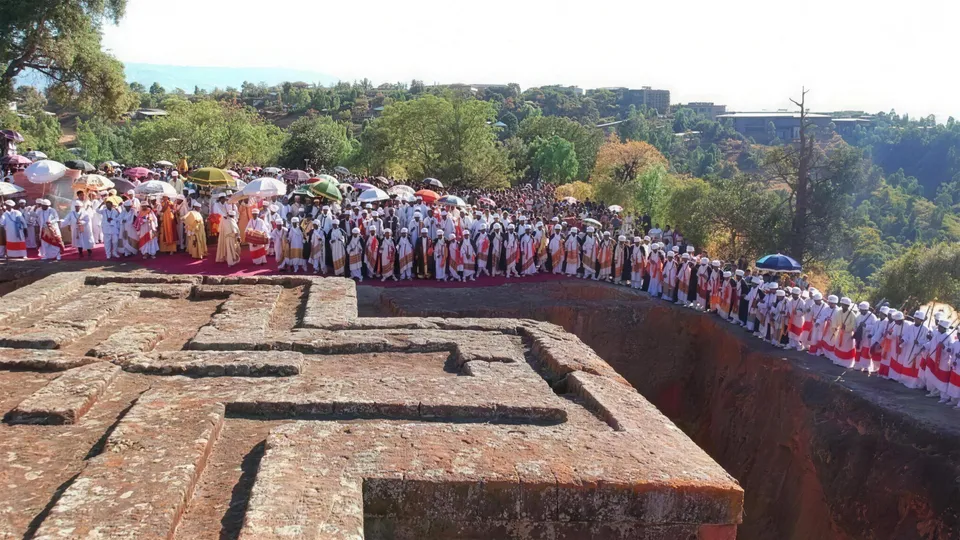
Genna is the Ethiopian Orthodox Christmas, observed on 7 January in the Gregorian calendar. Services begin before dawn, and many families mark the day with a festive meal — see our doro wat guide for the dish most associated with celebration. Timkat commemorates the baptism of Jesus. On the eve, priests carry the tabot — a replica of the Ark of the Covenant kept in every church — in procession to a body of water, where the night is spent in prayer and song; on the day itself the water is blessed and sprinkled over the crowd in a renewal of baptismal vows, with processions, white netela shawls, colourful umbrellas and drums. Our Timkat and Meskel festivals guide goes deeper.
Where to watch: Addis Ababa, Gondar or Lalibela
Addis Ababa: easiest and most flexible
Processions from churches across the city gather at Jan Meda and other open ground. Addis is the easiest to reach and the only one of the three outside the Amhara region, with a wide choice of hotels — see the best hotels in Addis Ababa. Book a hotel near your viewing point, because roads close and traffic is heavy.
Gondar: the Fasilides Bath
In Gondar, Timkat centres on the Fasilides Bath below the royal compound, which is filled with water for the celebration; see the Gondar castles guide. It is atmospheric but sits in the Amhara region.
Lalibela: the pilgrimage
Lalibela's rock-hewn churches draw huge numbers of pilgrims for Genna and Timkat, and the town is at its most extraordinary then — and at its most crowded, with flights and rooms sold out far ahead. It is also in the Amhara region. See the Lalibela churches guide, where to stay in Lalibela and how to get there.
Check the travel advisory before you commit
Flights and bookings
Domestic flights, rooms and drivers around both dates sell out months ahead and prices jump, so book as early as you can and prefer refundable rates. International visitors flying in on Ethiopian Airlines often get cheaper domestic fares — see the domestic flights guide.
What to wear and pack
Dress modestly — shoulders and knees covered — and wear shoes you can slip off, because you will remove them at churches and stand for hours. Women often wear a white netela or a light shawl. January days are sunny and nights are cold at altitude, so bring layers. Our what to wear to Ethiopian churches guide has the details.
Festival etiquette
- Watch respectfully — these are religious ceremonies, not performances.
- Ask before photographing people, and never photograph the tabot as it is carried.
- Keep to the edges of processions and follow marshals' directions.
- Protect your belongings in crowds — see our scams guide.
- Carry small birr notes — see the money guide.
Plan the rest of the trip
Combine the festival with a short itinerary — see the 10-day itinerary and, if you would rather avoid the advisory region, our 7-day Rift Valley and south itinerary.