If Ethiopia had to be reduced to a single plate, it would be doro wat: chicken slow-cooked for hours in a dark, glossy, berbere-red sauce, with hard-boiled eggs and a wheel of sour injera to scoop it up. It is the dish served at Easter, at weddings and for any guest worth honouring. This guide explains what is actually in it, how hot it really is, when you can and cannot find it, how to eat it properly, and where it fits on an Addis Ababa menu — so the first time you order it, you order it well.
Key facts
- What it is
- Ethiopia's national dish — chicken slow-cooked in a deep red berbere sauce, served with hard-boiled eggs on injera
- Amharic
- ዶሮ ወጥ (doro wat) — often ordered as doro wat be injera, ዶሮ ወጥ በእንጀራ
- Key flavours
- Berbere chilli blend, niter kibbeh (spiced clarified butter), and a very large amount of slow-cooked onion
- When it is eaten
- Holidays and celebrations — Fasika (Easter), Enkutatash, Meskel, Genna — and weekends; never on fasting days
- Heat level
- Medium to fiery — ask for it mild (ያልጠና) if you are unsure
- How to eat it
- Tear injera with your right hand and scoop up the chicken and sauce; the eggs are shared around the table
- Vegetarian?
- No — see the fasting-food guide for the plant-based equivalents on Wednesdays and Fridays
What doro wat actually is
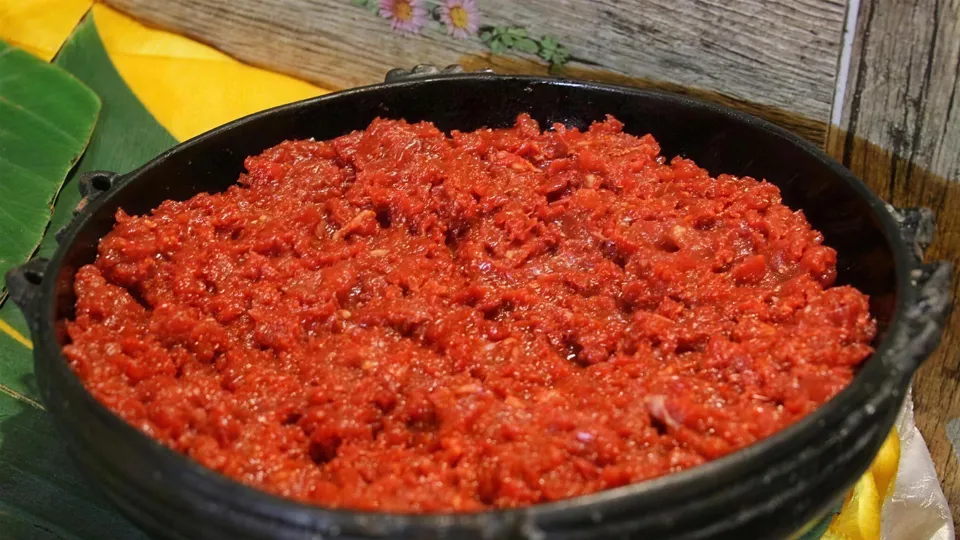
Doro wat (ዶሮ ወጥ) is chicken stewed in berbere — Ethiopia's signature blend of dried chilli and spices — with an astonishing quantity of red onion and niter kibbeh, a clarified butter simmered with spices such as fenugreek and cardamom. The onions are cooked down slowly, usually in a dry pot first, until they dissolve into the sauce; that, rather than any single spice, is what gives the dish its depth.
It arrives with hard-boiled eggs that have been scored so the sauce soaks in, laid on injera — the spongy, slightly sour flatbread that serves as plate, spoon and napkin. In Amharic it is often ordered in full as doro wat be injera (ዶሮ ወጥ በእንጀራ), chicken stew with injera.
How hot is it?
Properly made doro wat is warm to fiery, but the heat is layered rather than sharp: the long-cooked onion and the spiced butter round it off. If you are unsure, ask for it mild (ያልጠና, yalt'ena) or begin with a milder dish. The alicha stews are cooked without berbere and are a good starting point for children and sensitive stomachs. Eating with plenty of injera, and a little ayib (a mild fresh cheese) when it is on the platter, tames the heat. Our family restaurants guide covers mild options for fussy eaters.
When you can — and cannot — find it
Doro wat is the celebration dish. It anchors the tables of Fasika (Ethiopian Easter), Enkutatash (New Year), Meskel and Genna (Christmas), and weddings, and families traditionally prepare it for weekends and honoured guests. Because it takes hours to cook properly, it is often at its best at weekends and around the holidays; see our guide to the Ethiopian calendar and holidays and the Timkat and Meskel festivals to plan around them.
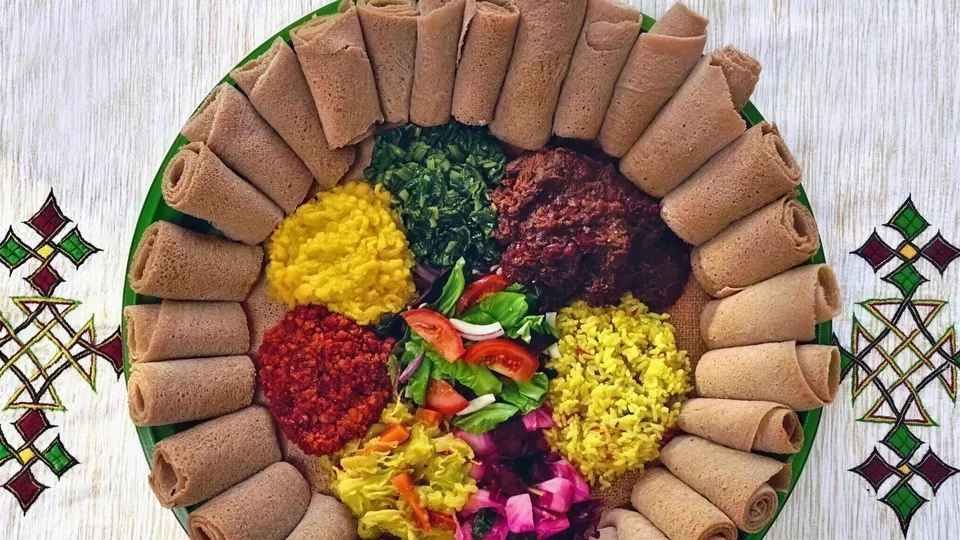
It is not eaten on fasting days. Orthodox Christians abstain from animal products on Wednesdays and Fridays and through longer fasting seasons, and on those days most traditional restaurants serve only plant-based dishes. If your trip includes a fasting day, that is the moment to try beyaynetu, the vegan fasting platter — see our fasting food guide.
How to eat it properly
- Wash your hands. Ethiopian food is eaten with the right hand; no cutlery is expected.
- Tear, don't cut. Pull a piece of injera from the edge of your side of the platter, wrap it around a mouthful of chicken and sauce, and eat.
- Share the egg. The eggs are for the table, not one diner; break them into portions rather than taking one whole.
- Accept the gursha. If someone feeds you a folded mouthful by hand, it is a gesture of affection. Refusing is the only real rudeness available to you.
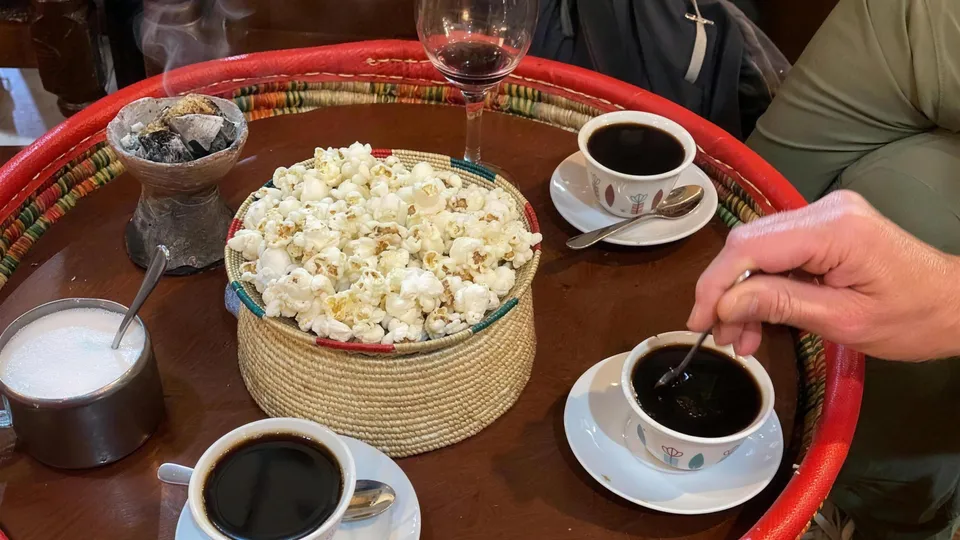
- Finish with coffee. A meal this rich is traditionally followed by the three-round coffee ceremony — see our coffee ceremony guide.
Where to eat it in Addis Ababa
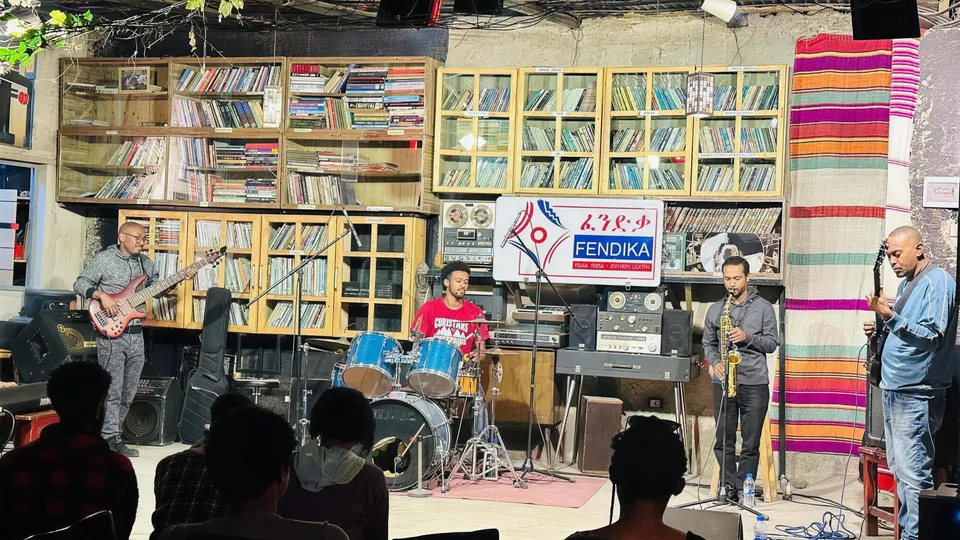
Almost any traditional Ethiopian restaurant serves doro wat; the menu will say doro wat or doro wot. The best versions tend to come from busy local restaurants where it is cooked in volume, and from the cultural restaurants with live azmari music, which are a good way to meet the dish in context. On a budget, our cheap eats guide shows how to eat well for less. Prices move quickly in Ethiopia, so ask before you order rather than trusting any published number.
Can you make it at home?
Yes, and it rewards patience more than skill. Cook a large quantity of finely chopped red onion slowly in a dry pot until it collapses; add niter kibbeh and berbere; simmer until the sauce is dark and thick; add the chicken and let it cook gently until tender; finish with scored hard-boiled eggs. The two things that matter are the onion — far more than feels reasonable, cooked far longer — and the berbere, which is worth buying from an Ethiopian grocer rather than substituting generic chilli powder. Serve with injera.
Plan the rest of your food trip
Doro wat is the headline, but not the whole menu. Our guide to what to order walks through tibs, kitfo, shiro and more, and Ethiopia for foodies pulls the food experiences together. If you are travelling to eat, make sure your travel insurance is in place before you go.