Addis Ababa is one of the cheapest capital cities in Africa to eat well in — but only if you know where to stand. The same plate of shiro costs pennies at a neighbourhood mesob and several times that under a hotel chandelier, and the gap has almost nothing to do with quality. Here is how to eat properly on very little: the dishes that cost least, the days when food gets cheaper, the neighbourhoods worth walking to, and the handful of rules that keep a cheap meal from becoming an expensive mistake.
Key facts
- Cheapest full meal
- Beyaynetu (fasting platter) — one plate, many stews, feeds most people
- Cheapest days
- Wednesday & Friday — Orthodox fasting days, when vegan food is everywhere and cheapest
- Best value neighbourhoods
- Piassa, Merkato edges, Arat Kilo and Sidist Kilo (university crowd)
- Street snacks
- Sambusa, kolo, roasted maize, fresh spris juice — pennies compared with a sit-down meal
- Coffee
- A macchiato at a neighbourhood buna bet costs a fraction of a hotel café
- The mark-up trap
- Hotel and Bole tourist restaurants can charge 3–5× a local place for the same dish
- Water rule
- Bottled water only, and skip ice and raw salad at the cheapest stalls
The single most useful trick: eat on a fasting day
Ethiopian Orthodox Christians fast on Wednesdays and Fridays, and through longer seasons including the weeks before Easter. On fasting days, restaurants across the city put out beyaynetu — a wheel of injera topped with small mounds of lentils, split peas, cabbage, beetroot, collard greens and potato. It is almost always the cheapest full meal on the menu, it is entirely plant-based, and because half the city is eating it, it is fresh.
This is the rare case where the budget option is also the best introduction to the cuisine. If you eat one meal in Addis, make it a fasting platter on a Wednesday at a place packed with office workers. Our vegan and fasting food guide goes deeper into the calendar.
What to order when money is tight
- Shiro — spiced chickpea-flour stew, served bubbling in a clay dish. The national comfort food and the reliable cheap order.
- Beyaynetu — the fasting platter above. One plate, many stews, no meat.
- Firfir / fitfit — torn injera tossed with berbere sauce. The standard cheap breakfast, often eaten with a glass of tea.
- Misir wot — red lentil stew, deeply spiced, one of the best things on any menu at any price.
- Gomen — collard greens, usually the cheapest single item you can add.
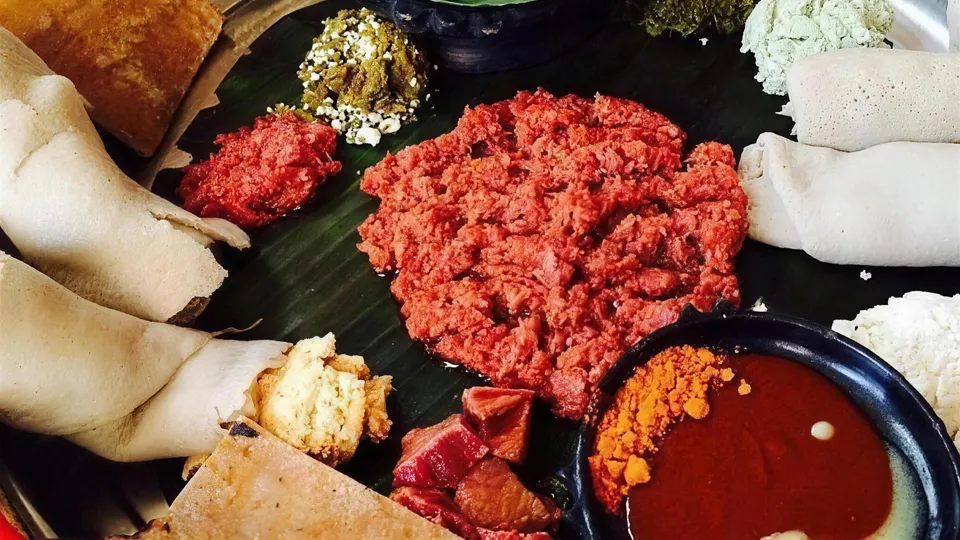
Meat is where the bill climbs. Tibs (sautéed cubes of beef or lamb) and kitfo (minced raw or lightly warmed beef with spiced butter) are worth having, but treat them as the occasional splurge rather than the daily habit. Our guide to what to order walks through the full menu.
Where to eat: neighbourhoods that pay you back
Piassa is the historic centre and still the best single area for cheap, honest food, with old restaurants that have been serving the same dishes for decades and pastry shops left over from the Italian period. Arat Kilo and Sidist Kilo feed the university crowd, which keeps prices down and portions generous — a reliable indicator anywhere in the world. The streets around the edges of Merkato serve traders all day and cook accordingly, though the market itself is intense and better visited with your wits about you; see our scams guide before you go.
The area to be careful in is Bole. It has excellent restaurants, but it is also where menus appear in English with prices to match. Walking two streets back from the main road frequently halves the bill.

Street snacks and what they cost you
For the price of a single restaurant dish you can graze all afternoon. Sambusa — the Ethiopian samosa, usually lentil — is fried to order at pavement stalls. Kolo, a mix of roasted barley, chickpeas and sunflower seeds, comes in a paper cone and is the standard bus-journey snack. Roasted maize appears on charcoal braziers along the roadside in season. And spris, a layered fresh juice of avocado, mango and papaya, is a meal in a glass and a genuine Addis specialty.
Coffee, which is the best bargain in the city
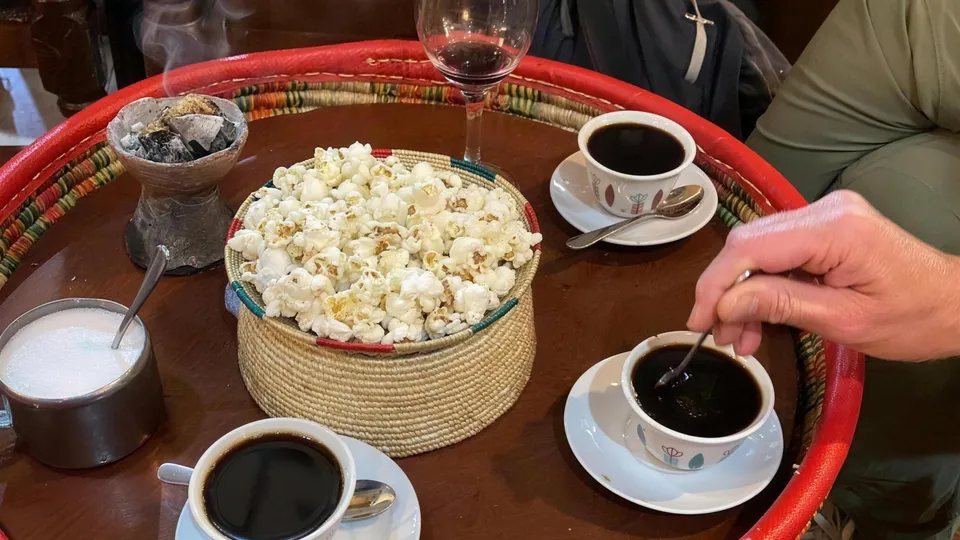
Ethiopia grows some of the world's finest coffee and sells it domestically for very little. A macchiato at a neighbourhood buna bet — a small, strong shot cut with milk, an Italian-era inheritance — costs a fraction of what the same cup costs in a hotel lobby, and is usually better. If you are offered a full coffee ceremony, accept: it is roasted, ground and brewed in front of you across three rounds, and it is hospitality rather than a transaction. Our coffee ceremony guide explains how to be a good guest.
Six rules that keep cheap food cheap
- Follow the queue. High turnover means fresh food. An empty restaurant at lunchtime is telling you something.
- Ask the price before you order where nothing is written down. This is normal, not rude.
- Carry small notes. Cheap places rarely have change for large ones, and almost never take cards.
- Bottled water only. Skip ice and raw salad at the cheapest stalls.
- Eat with your right hand. No cutlery is the norm; wash or sanitise first.
- Accept the gursha. If someone feeds you a folded parcel of injera by hand, that is affection, and refusing it is the only real rudeness available to you.
Tipping and the bill
Tipping is appreciated but modest — rounding up, or roughly five to ten per cent at a sit-down restaurant, is generous by local standards and unnecessary at a street stall. Bills at cheap places are often tallied aloud rather than printed. If you are eating as a group, one person paying for everyone is the norm rather than splitting.
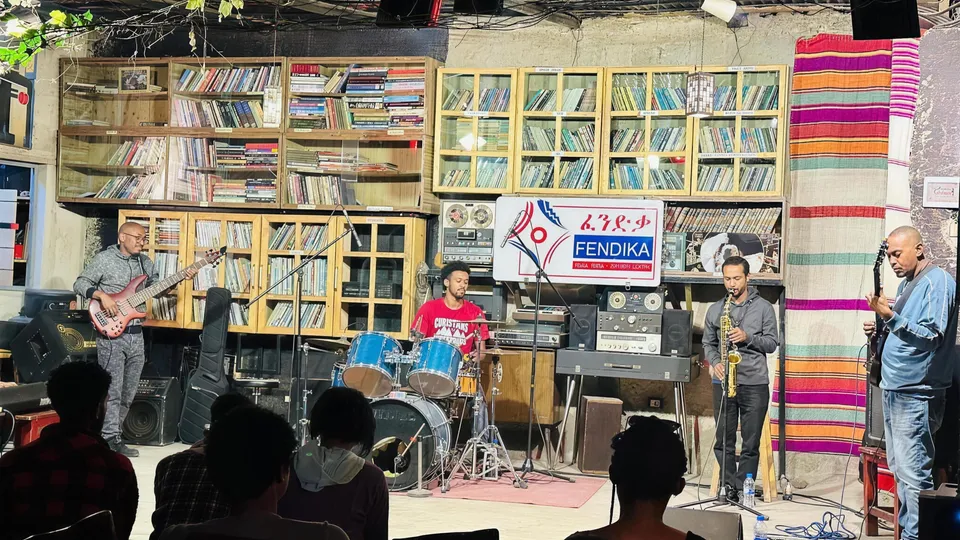
For what all of this means across a whole trip, our Ethiopia travel budget guide puts food alongside transport and accommodation. Travelling with children, our family restaurants guide covers the places that make it easy, and for an evening with music rather than just dinner, see cultural restaurants and live music.