Vegans and vegetarians often brace for a hard trip and arrive to find the opposite: Ethiopia may be the single easiest place in Africa — and one of the easiest anywhere — to eat entirely plant-based, and it has been for over a thousand years. The reason is the Orthodox fasting tradition, which built a complete, spice-rich vegan cuisine into everyday life. Here's how to eat brilliantly, the one word that unlocks it, and how to plan around the calendar.
Key facts
- Why it's easy
- Orthodox fasting (tsom) cooking is naturally vegan — no meat, dairy or egg
- The magic word
- "Ye'tsom" (of the fast) — ask for ye'tsom beyaynetu
- Fasting days
- Most Wednesdays & Fridays year-round, plus long fasting seasons
- The dish to order
- Ye'tsom beyaynetu — a platter of vegan stews on injera
- Naturally gluten-free?
- Teff injera is; but some places blend in wheat — ask
- Hardest region
- Remote areas & meat-focused menus — plan around fasting days
Why Ethiopia is a plant-based paradise
The Ethiopian Orthodox Church observes some of the most demanding fasting rules in Christianity: on fasting days, observant people eat no meat, no dairy and no eggs — and, traditionally, no animal fat at all. Across the year that adds up to a great many days, including most Wednesdays and Fridays and long fasting seasons such as the weeks before Fasika (Easter). The result is that Ethiopia has spent centuries perfecting a full, satisfying, entirely vegan cuisine — not a compromise menu, but some of the country's best-loved cooking.
For a plant-based traveller this is transformative: you are not the awkward exception, you are ordering the way millions of Ethiopians eat twice a week.
The one word to learn: ye'tsom
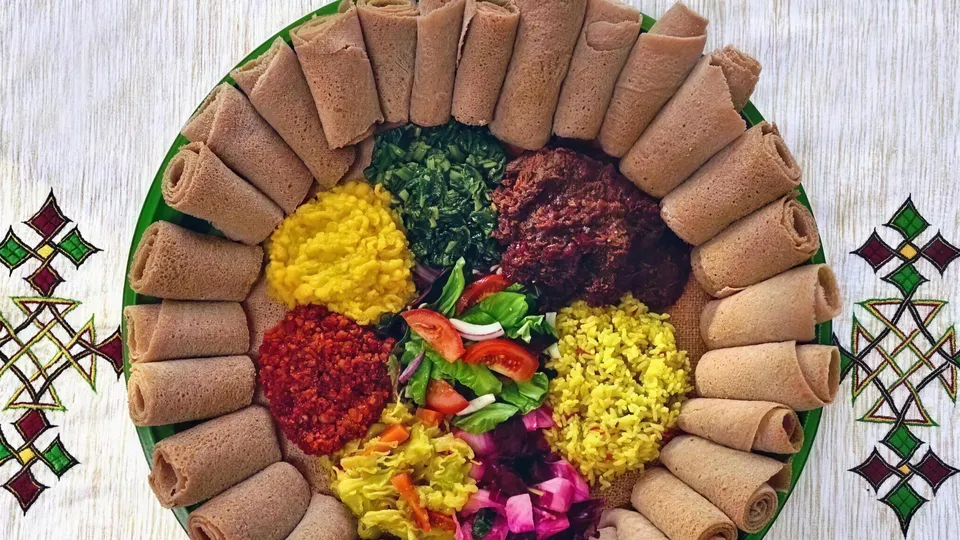
The word that unlocks everything is ye'tsom (የጾም) — "of the fast." Ask for ye'tsom beyaynetu and you'll be brought the vegan version of the classic sampler: a wheel of different stews arranged on injera, meat-free and dairy-free by definition. It's the single best order for a plant-based eater — variety, value and zero explaining required.
What's on a vegan platter
- Shiro — silky spiced chickpea or broad-bean purée; the comfort food of the country, and vegan when made ye'tsom.
- Misir wat — red split lentils in berbere, deep and warming.
- Kik alicha — mild yellow split peas with turmeric, for gentler palates.
- Gomen — collard greens, garlicky and bright.
- Atkilt wat — cabbage, carrot and potato, softly spiced.
- Fosolia, dinich, key sir — green beans, potato and beetroot stews that add colour and sweetness.
- Ful — spiced fava beans, usually a breakfast, and a reliable plant-based start to the day.
Scoop them all with injera, which is itself made from teff and — usually — naturally gluten-free. One caveat for coeliacs: some cheaper injera is cut with wheat or barley flour, so if gluten is a medical issue rather than a preference, ask whether it's pure teff.
The one thing to watch: butter
The only real trap is niter kibbeh, the spiced clarified butter that enriches many non-fasting stews. A "vegetarian" dish on a normal day might be cooked with it. The fix is simple: order ye'tsom specifically, or ask "ye'tsom no?" ("is it fasting food?"). On Wednesdays and Fridays this is moot — almost everything on the menu is already vegan.
Planning around the calendar
In Addis and the tourist towns you'll find ye'tsom food any day. Two habits make the rest of the country effortless:
- Anchor big meals to Wednesdays and Fridays, when fasting food is the default everywhere — even remote roadside places.
- Know your universal fallbacks: shiro and ful are almost everywhere, and injera with a lentil or vegetable wat is nearly always possible.
Understanding the fasting calendar also deepens the trip — it's woven into the festivals and rhythm of the year, which our Ethiopian calendar guide unpacks. And for the wider food world you're stepping into, from injera etiquette to the dishes worth crossing town for, start with our what-to-order food guide and foodie guide.
The bottom line
Come hungry and leave converted. Ethiopian fasting food is not a limited "vegan option" bolted onto a meat menu — it's a centuries-old cuisine in its own right, and for many plant-based travellers it turns out to be the culinary highlight of the entire trip. Learn one word, watch for butter on non-fasting days, and eat like a local.
Fasting food is also the cheapest food, which is a happy coincidence for anyone watching money — our cheap eats guide follows that thread through the city.