Injera is the heart of an Ethiopian meal: a sour, spongy, slightly bubbly flatbread that is plate, spoon and napkin at once. Whether you are about to eat it for the first time, wondering if it is gluten-free, or thinking of making it at home, this guide explains what injera and teff are, why it tastes the way it does, how to eat it properly, and how to cook a respectable batch in an ordinary kitchen.
Quick answer
Injera is a sour, spongy Ethiopian flatbread made from fermented teff flour and water, cooked on one side only on a griddle called a mitad. It is eaten with the right hand, torn and used to scoop stews. Teff is naturally gluten-free, but restaurant injera is often blended with wheat or barley, so ask for 100% teff if you avoid gluten.
Key facts
- What it is
- A sour, spongy flatbread made from fermented teff flour and water; the plate, spoon and napkin of Ethiopian meals
- Teff (ጤፍ)
- A tiny grain native to Ethiopia, milled into flour for injera
- Why it's sour
- Natural fermentation — the longer the batter ferments, the tangier the injera
- How it's cooked
- On one side only, on a large griddle called a mitad; the holes ('eyes') form on top and hold the sauce
- How to eat it
- Right hand only: tear a piece, scoop the stew, eat — and accept a gursha if one is offered
- Gluten
- Teff is naturally gluten-free, but injera is often blended with wheat or barley, especially outside Ethiopia — always ask
- At home
- Teff flour + water, a few days' fermentation (or a shortcut with a little baking powder) and a non-stick pan
What injera is, and what teff is
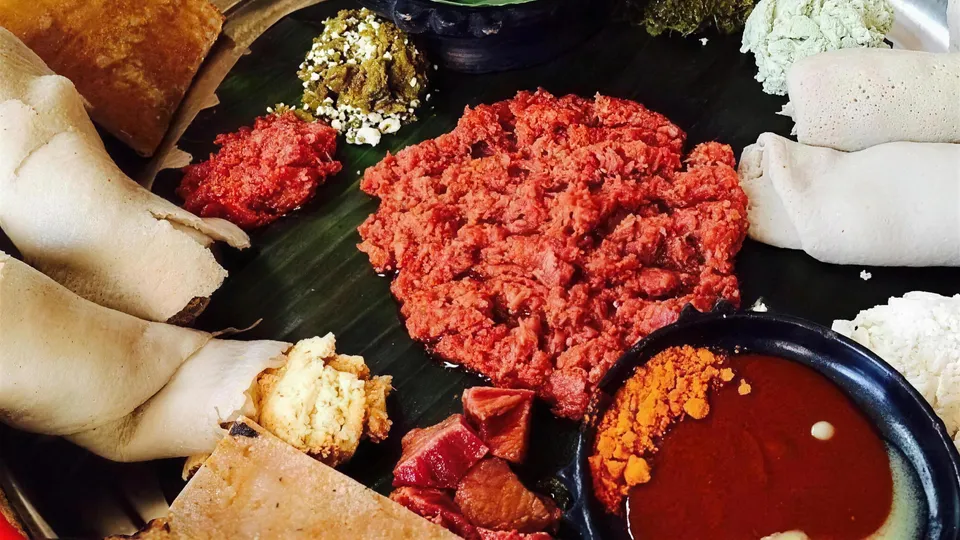
Injera is a fermented flatbread made from teff (ጤፍ), a tiny grain native to Ethiopia, milled into flour and mixed with water. It is sour, soft and full of small holes, and in Ethiopia it is served on a large round platter with stews piled on top — you can see the whole tradition at work in our guide to what to order. It is also the key to doro wat, shiro and the whole fasting-food repertoire in the fasting food guide.
Why injera is sour
Injera is sour because the batter is left to ferment naturally. Wild yeasts and bacteria act on the teff and water over a few days, producing the tang and the bubbles that give injera its sponge-like texture. The longer the fermentation, the more sour the bread. That is why injera made in a home kitchen in Addis can taste noticeably tangier than a restaurant's, and why bakers adjust the time to their taste and the temperature of the room.
How injera is cooked
The batter is poured in a spiral, from the outside edge to the centre, onto a large, lightly greased griddle called a mitad, which is traditionally clay but today often metal or electric. It is covered and cooked on one side only. As it cooks, bubbles rise and burst, leaving the holes — the "eyes" — that soak up sauce. The result is soft, spongy on top and slightly smoother underneath, and it is cooled flat before being stacked.
How to eat injera properly
- Wash your hands. Ethiopian food is eaten with the right hand.
- Tear, don't cut. Tear a piece from the edge of your side of the platter.
- Scoop the stew with the torn piece, eat it in one mouthful, and keep the sauce away from your fingers as much as you can.
- Eat the base last. The injera under the stews has soaked up the sauce and is the best part.
- Accept a gursha. If someone feeds you a folded mouthful by hand, it is a gesture of warmth — see our culture and etiquette guide.
Is injera gluten-free?
Teff is naturally gluten-free, and injera made from 100% teff and water contains no gluten. But many restaurants and commercial producers blend it with wheat, barley or sorghum, particularly outside Ethiopia, so ask specifically for 100% teff injera if you avoid gluten for medical reasons, and ask how it is made.
How to make injera at home
A traditional batch takes planning rather than skill. Authentic recipes use only teff flour and water; the batter is left at room temperature for a day or more — recipes range from about a day and a half to several days depending on the room's warmth and how sour you want it — until it bubbles and smells tangy. Skim off any liquid or discoloured foam, stir in a little salt, and thin the batter to a pancake-like consistency. Pour it in a spiral into a hot, lightly greased pan, cover, and cook on one side until the surface is set and covered in holes; do not flip it. If you are in a hurry, shortcut recipes use a little baking powder to cut the wait to about a day, at the cost of a milder flavour. Expect to spoil the first few — everyone does.
Try it where it began
Making injera at home is a good project, but nothing beats eating it fresh in Ethiopia, and many cultural tours include a meal or cooking demonstration. See our cultural restaurants guide, the cheap eats guide for the best-value injera meals, and Ethiopia for foodies for the bigger picture.