Ethiopian cuisine is what happens when a civilisation cooks in isolation for two thousand years with its own grain, its own spice logic and two hundred fasting days a year: a food culture unlike anything else on Earth, eaten by hand from a shared platter, where the bread is the plate and feeding your neighbour is good manners. Come hungry. Here's the full menu — from village kitchens to Addis's new wave.
Key facts
- The base
- Injera — sour teff flatbread, plate and cutlery in one
- National dish
- Doro wat: slow chicken stew in berbere
- Fasting bonus
- ~200 vegan days/year — Wed, Fri & long fasts
- The dare
- Kitfo — spiced beef tartare (ask leb leb for lightly cooked)
- To drink
- Buna (coffee), tej (honey wine), tella (home beer)
- Budget
- Local feast US$3–6; top Addis tasting menus US$25–40
Injera: the operating system
Everything rests — literally — on injera, a sourdough flatbread of teff, the world's smallest grain, domesticated here and nowhere else (gluten-free, iron-rich, now a superfood export). Batter ferments for days, then hits a clay mitad griddle to rise into a spongy, tangy canvas pocked with 'eyes' that grip sauce. It's plate, spoon and napkin at once: tear with the right hand, wrap, eat. When the sauces soak the bread beneath, you've reached the best bite of the meal.
The wat universe
Berbere — a deep-red compound of chilli, garlic, ginger, besobela and a dozen more — is the engine of the stew canon. The king is doro wat: chicken simmered for hours in berbere and slow-melted onions with a hard-boiled egg, the dish of holidays and homecomings. Around it orbit key wat (beef), misir wot (red lentils), buttery shiro (spiced chickpea silk — the everyday hero), and the gentle alicha line for tender palates. Order beyaynetu — 'a bit of everything' — and the whole universe arrives on one injera.
The brave list (and the fresh list)
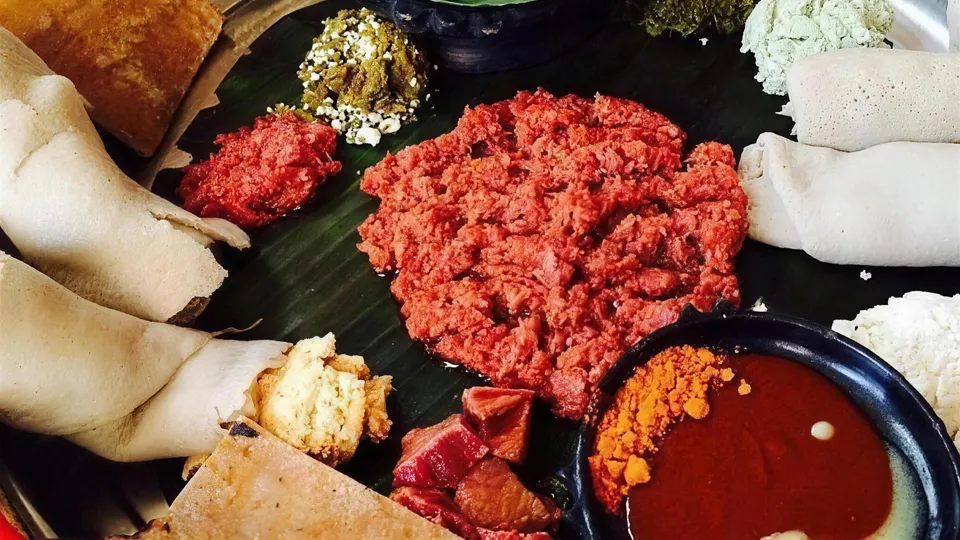
- Kitfo — hand-minced beef warmed in kibe (spiced clarified butter) and mitmita chilli; the Gurage people's gift. Order leb leb (lightly cooked) at a dedicated kitfo bet, with kocho flatbread and ayib cheese.
- Tere siga — cubes of raw beef off the butcher's hook, dipped in mitmita. Cities only, strong stomachs only.
- Dulet — minced tripe/liver breakfast of champions.
- Fresh lane: chechebsa (torn flatbread in kibe and berbere) for breakfast, fuul (fava mash) in the Muslim east, sambusas from street fryers, and Ethiopia's glorious layered juice — avocado, mango, papaya poured like a sunset (ask for spris).
What to drink
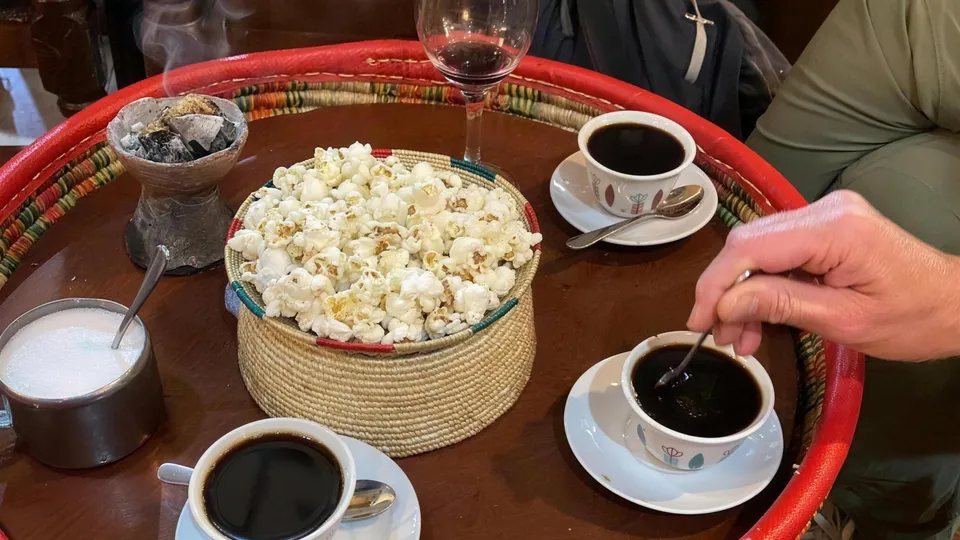
Buna first, always — the ceremony is the culture's heartbeat (full guide). Then tej: honey wine fermented with gesho leaves, served in round-bellied berele flasks at dedicated tej bets — deceptively drinkable at 7–14%. Tella is the roasted-barley home brew; St George and Habesha lagers cover the beer bases; and Rift Valley vineyards (Ziway's Castel project) now bottle very respectable reds — a sentence nobody expects about Ethiopia.
Where to eat it best
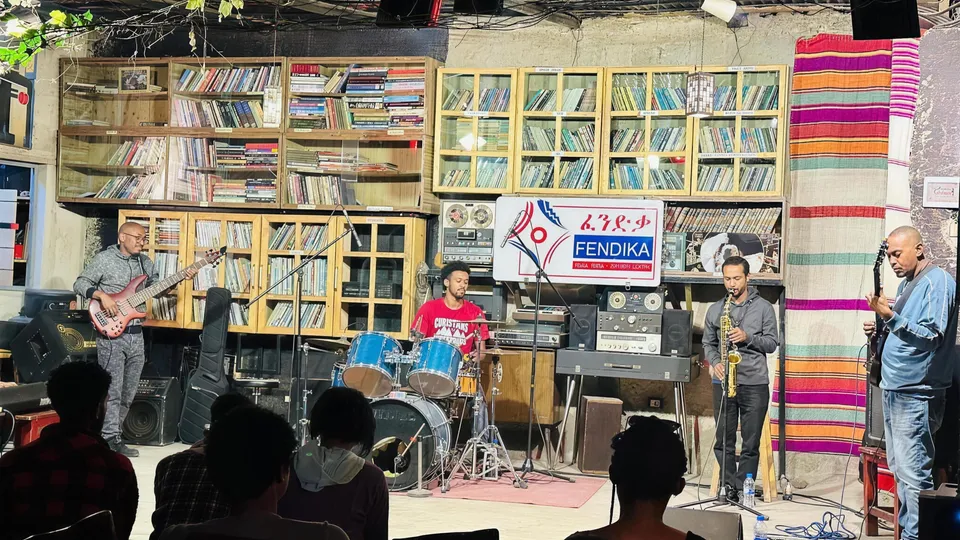
Cultural theatres: Yod Abyssinia, Totot and 2000 Habesha in Addis do the full spread with music and eskista dancing — touristy and genuinely good. The kitfo pilgrimage: Yohannes Kitfo or any Gurage-run kitfo bet. The new wave: Addis's young chefs are plating teff and berbere into tasting menus and third-wave cafés around Bole — book ahead for weekend tables. The real thing: any countryside invitation; accept the gursha when it comes. Regional detours worth planning around: Harar's harira and sweets during Ramadan nights, Bahir Dar's Nile perch, Hawassa's dawn fish market, and fir-fir breakfasts everywhere.