Ethiopians will forgive every mistake you make — they'll feed you while you make them — but the traveller who learns the culture's grammar gets a different country: longer conversations, better invitations, prices that settle faster, and the feeling of doors opening one after another. Here is that grammar, from the double handshake to the thirteen-month calendar.
Key facts
- Greeting
- Handshake + right hand, often with shoulder bump between friends
- Eating
- Right hand only; shared platter; accept the gursha
- Coffee
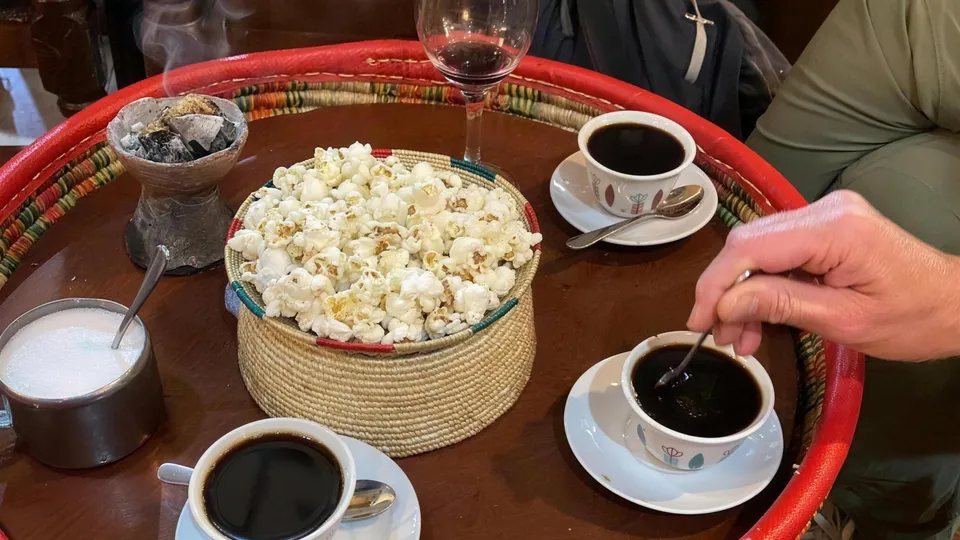
- Accept the first cup; three rounds is friendship
- Churches
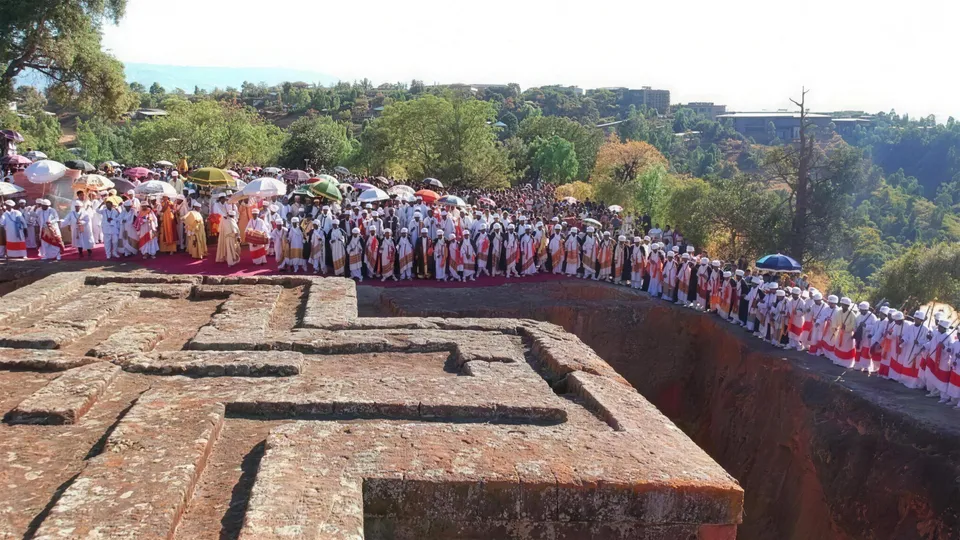
- Shoes off, shoulders/knees covered; some sites men-only
- Calendar
- 13 months, ~7–8 years 'behind' Gregorian
- The word to know
- Ishi (እሺ) — 'okay', the national lubricant
Greetings: never rush the hello
Greeting is infrastructure here, not formality. Shake hands (right hand, or wrist if your hand is full or wet — offering a dirty hand is worse than none), and between friends add the shoulder bump — right shoulders touching, once or three times. Elders get greeted first, slightly bowed to, and never rushed. The verbal volley — selam! dehna neh? dehna! egziabher yimesgen! — loops several rounds; joining it, however clumsily, marks you as someone worth talking to. The universal response to almost anything is ishi ('okay') — you'll be saying it in your sleep by day three.

The table: one platter, right hands, and the gursha
Meals arrive on a shared injera platter, and the choreography matters: wash hands first (a jug may be brought to the table), eat strictly with the right hand, tear from the injera in front of you rather than reaching across, and don't lick your fingers mid-meal. The gursha — a companion placing food directly in your mouth — is a high compliment; take it with grace and return one later. Hosts refill relentlessly: pace yourself, and know that leaving a little signals satisfaction while an empty plate signals 'more, please'. When the coffee ceremony follows, staying through the third round is where friendships get made.
Sacred spaces
Orthodox churches: shoes off at the door (thick socks are your friend at Lalibela), shoulders and knees covered, women often with a light headscarf; some monasteries admit men only (noted in our guides); menstruating women traditionally refrain from entering — quietly respected rather than policed. Stand when clergy pass, never turn your back on the altar area, and step around — never over — pilgrims resting on the ground. Mosques: in Harar and the east, non-Muslims generally admire from the threshold unless invited; dress conservatively and skip Friday midday visits. In both worlds, fasting seasons reshape daily life — restaurant menus go vegan in Lent, and eating publicly during Ramadan daylight in Harar is poor form.
Time, calendars and the art of patience
Ethiopia keeps a 13-month calendar running seven to eight years behind the Gregorian (the millennium arrived here in 2007) and counts hours from dawn — details in the how-to guide. Culturally this pairs with a relationship to time that prizes people over schedules: meetings begin when the greetings finish, buses leave when full, and impatience reads as rudeness. The traveller's move is aikido, not resistance — build slack into plans and treat delays as conversation opportunities. They are.
The quick codex
- Hands: give, receive and wave with the right; both hands together shows extra respect.
- Feet: don't point soles at people; don't step over someone or their food.
- Elders: stand when they enter, offer your seat, greet them first — non-negotiable social gold.
- Invitations: 'come for coffee' is sincere. Accept when you can; bring sugar or fruit, never count the cost aloud.
- Haggling: expected in markets with humour, insulting in shops with price tags. Settle around 50–70% of opening asks, smiling.
- Public affection: same-sex hand-holding between friends is normal platonic warmth; romantic displays of any kind stay private.
- The left-hand taboo, the shoe rule, the first cup of coffee: when in doubt, watch the room and copy it 30 seconds later.