Ethiopia rewards competence. It's not a hard country to travel — millions do it joyfully — but it runs on its own systems: its own calendar, its own clock, its own airline logic, a cash economy with mobile-money veins, and an etiquette of greetings that opens every door if you learn ten words. This is the manual we wish someone had handed us at Bole arrivals.
Key facts
- Fly internally
- ET domestic ~50% off with ET international ticket
- City transport
- Ride/Feres apps (Addis); bajaj tuk-tuks elsewhere
- SIM/eSIM
- Ethio Telecom or Safaricom at Bole — passport needed
- Money
- Cash country outside cities; crisp USD + city ATMs
- Time & dates
- Own calendar (13 months) & 6-hour-offset clock
- Power
- 220V, plugs C/F (European two-pin)
Getting around: the flight trick and the road reality
The single most important booking fact in Ethiopian travel: Ethiopian Airlines discounts domestic flights roughly 40–60% when your international ticket is also on ET. Book the long-haul first, then add internal hops (Addis–Lalibela–Gondar–Axum–Arba Minch all fly daily, ~US$40–90 discounted). Roads have improved massively — the Addis–Hawassa expressway, good asphalt to Bahir Dar and Harar — but distances deceive: what looks like four hours is often seven. Rule of thumb: fly anything over 400 km, drive the scenic short legs, and check current regional advisories before long overland stretches.
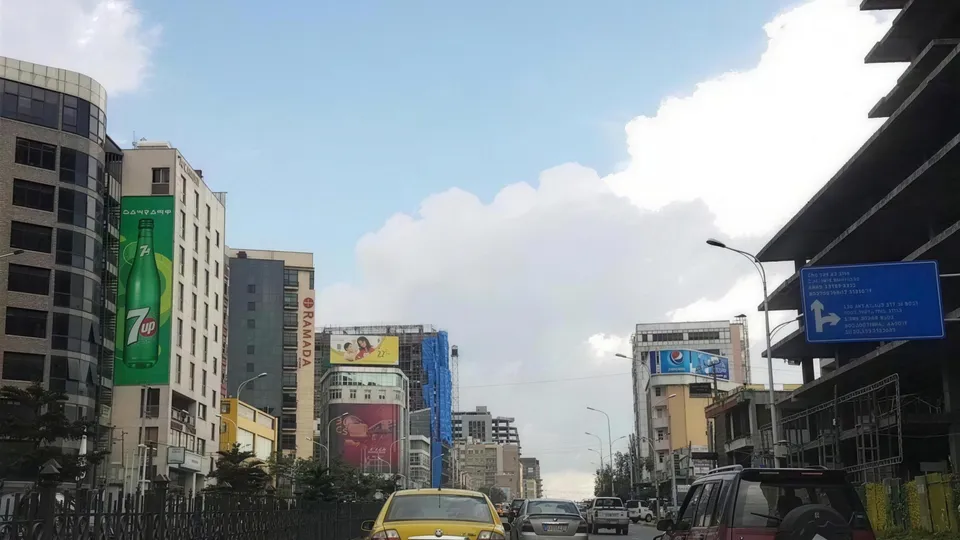
In cities: Addis runs on Ride and Feres apps (cheap, honest, cash or in-app). Everywhere else, the blue bajaj three-wheeler is king — agree Br 50–150 before boarding. Intercity minibuses are the people's network: fast, cosy (a generous word), and best boarded early morning at the source station. For flexibility, a car with driver runs US$80–120/day through any hotel — drivers double as fixers, translators and restaurant oracles.
Staying connected
Buy a SIM or eSIM at the Ethio Telecom or Safaricom desks in Bole arrivals (passport required, 10 minutes, a few dollars for generous data). Coverage is strong in towns, patchy on trekking routes, absent in the Danakil. Telebirr (Ethio Telecom's mobile money) increasingly pays for everything from bajaj to bananas — worth setting up if you'll stay weeks. Internet shutdowns during exam seasons or unrest are a real, occasional thing: download offline maps (Maps.me handles Ethiopia well) and keep bookings in screenshots.
Money, health, safety — the honest short version
- Money: since the 2024 float, official exchange is fair — change at banks/hotels, top up at city ATMs, carry small notes. Full detail in the budget guide.
- Health: travel clinic 4–6 weeks ahead; highlands are effectively malaria-free but lowlands aren't; bottled water; insurance that covers 4,000 m and medical evacuation (distances are long).
- Safety: petty theft in crowds beats violent crime by miles — front pockets in Merkato, ride apps at night. Regionally, conditions vary and change: check your government's advisory per region while planning, and re-confirm with local operators the week you travel. The fly-in tourist circuit has operated steadily this way for years.
- Scams, small: 'students' offering tours near Piassa, quoted-in-birr-charged-in-dollars confusion, and taxi 'no change' theatre. All dissolve with a smile and patience.
Ten words that change everything
| Amharic | Say it | Means |
|---|---|---|
| ሰላም | selam | hello / peace |
| አመሰግናለሁ | ameseginalehu | thank you |
| እባክዎ | ebakwo | please |
| አዎ / አይደለም | awo / aydelem | yes / no |
| ስንት ነው? | sint new? | how much? |
| ቆንጆ ነው | konjo new | it's beautiful |
| በጣም ጣፋጭ | betam tafach | delicious! |
| ይቅርታ | yikirta | excuse me / sorry |
| ደህና ሁን | dehna hun | goodbye |
| ቡና | buna | coffee (you'll need this) |
Every attempt earns a smile; ameseginalehu pronounced badly earns three. For deeper customs — the gursha, church etiquette, the double handshake — see the culture guide.