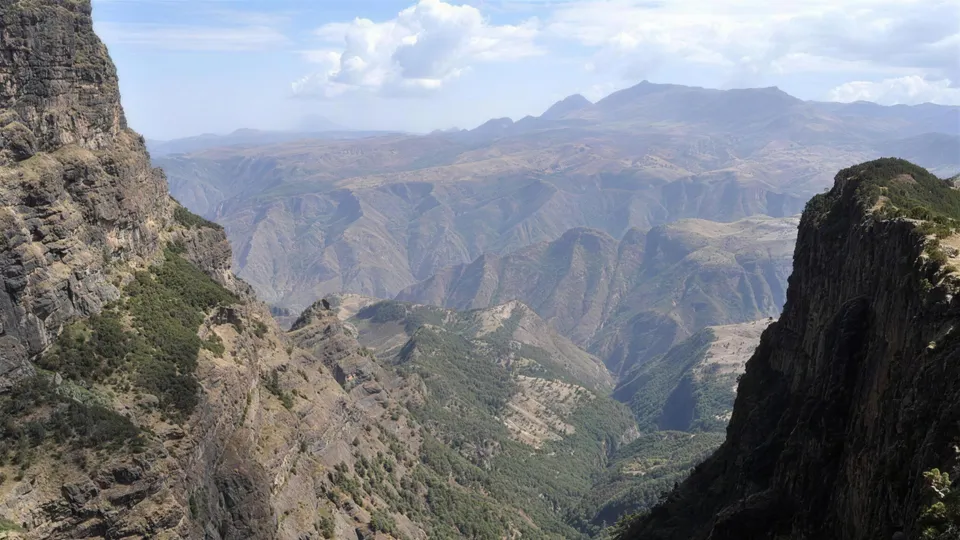
Lalibela is the reason most people come to Ethiopia: eleven churches cut downward out of solid rock in the twelfth century, still in daily use, still smelling of beeswax and incense. Where you sleep genuinely shapes the visit — the churches are best at dawn, and being ten minutes away rather than thirty is the difference between arriving with the priests and arriving with the tour buses. This guide covers where to stay at every budget, and opens with the thing you must decide first.
Key facts
- Advisory status
- Amhara region — 'Do Not Travel' (US/UK), July 2026
- Insurance
- Standard policies exclude advisory regions — verify
- Budget rooms
- US$20–40 · Mid US$50–90 · Upper US$90–160
- Best for families
- Sora Lodge, Tukul Village — space, quiet, food
- Best views
- Maribela, Cliff Edge, Panoramic View
- Altitude
- 2,500 m — expect a slow first day
Where to stay, by budget
Upper range (US$90–160)
- Maribela Hotel — perched above the town with the best-known view in Lalibela; sunset from the terrace is the photograph everyone takes home. Rooms are comfortable rather than luxurious, and it is a steep walk back up.
- Cliff Edge Hotel — exactly what the name says: built along an escarpment with vast views over the Lasta mountains. Superb for couples, poor for toddlers.
- Mezena Lodge — newer, well-finished, generous rooms, and among the more reliable kitchens in town.
Mid-range (US$50–90) — where most people should look
- Sora Lodge Lalibela — quiet, gardens, larger rooms, genuinely helpful staff. The best all-round choice for families.
- Tukul Village Hotel — rooms built as traditional round tukuls in stone, very central, walkable to the northern cluster. Characterful and practical at once.
- Panoramic View Hotel — the view of the upper-range places at a mid-range price; the trade-off is the climb.
- Lal Hotel & Spa — larger and more conventional, with a pool that matters more than you would think after a day on stone.
Budget (US$20–40)
Plenty of small guesthouses cluster near the church entrance, and standards are decent. Check three things before committing: hot water at the hours you will actually shower (early morning, when supply is weakest), backup power (cuts are routine), and walking distance to the churches — a cheap room forty minutes uphill is a false economy in thin air.
Choosing by what your trip is
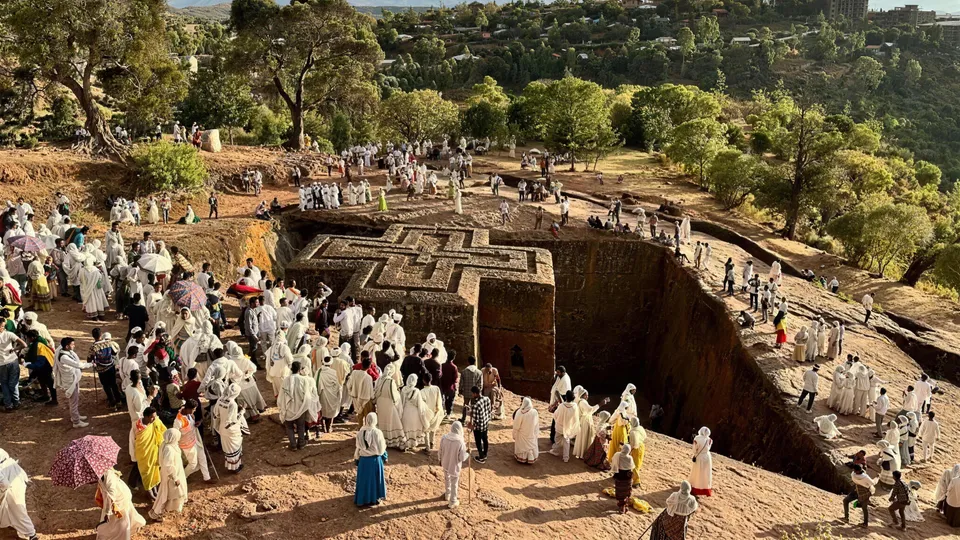
- Photographers: stay high — Maribela, Panoramic, Cliff Edge — and go down to Bete Giyorgis for first light.
- Families: stay flat and central — Sora Lodge, Tukul Village. Avoid unfenced cliff properties.
- Pilgrimage timing (Genna, 7 January): book six months ahead. The town fills with tens of thousands of pilgrims and every bed goes.
- One night only: stay as close to the northern cluster as possible and accept a lesser view. Proximity beats panorama on a short stay.
What to know before you book
- Altitude: 2,500 m. The churches involve steps, trenches and tunnels. Plan an easy first afternoon.
- The entry ticket is a single multi-day pass covering all the churches — buy it at the main office, keep it, and do not pay anyone separately at individual entrances.
- Shoes come off at every church. Slip-ons and thick socks; the stone is cold and worn slick. See what to wear.
- Power and water are intermittent town-wide. Carry a power bank; expect the hotel generator to cover evenings only.
- Cash. Card acceptance is limited even at better hotels. Bring birr from Addis.
- Guides are effectively essential — the churches are unlabelled and the history is oral. Hire through your hotel or the official guides' association rather than at the gate.
Eating
Ben Abeba is the one everybody mentions and it earns it — a Scottish-Ethiopian collaboration in a spiralling sculptural building on the escarpment, with good food and a view that does most of the work. In town, hotel restaurants are generally the safer bet for dinner; the local tej houses are worth an hour but not a stomach experiment on your first night.
For what you are actually going to see, read our complete guide to the rock-hewn churches, and check tours and day trips for Asheton Maryam and Yemrehanna Kristos.