Addis Ababa's museums were not designed with children in mind — there are few buttons, fewer screens and almost no interactivity. But one of them holds the most famous skeleton on earth, another lets you walk through an emperor's bedroom, and a third is a forest on a mountain. Handled with short visits and a good storyteller, they make a genuinely memorable day. Here is the order to do them in, and when to give up and go to the park.
Key facts
- The one they'll remember
- Lucy, National Museum — 3.2 million years old
- Best for running around
- Entoto Park — trails, horses, forest
- Most surprising
- Ethnological Museum — the emperor's bedroom
- Ages 4–8
- Short visits: 45 min max per museum
- Entry fees
- Mostly 50–200 birr; children often half
- Closed
- Many museums shut Mondays and public holidays
1. The National Museum — for Lucy
Go straight to the basement. Lucy (Dinkinesh in Amharic — "you are marvellous") is a 3.2-million-year-old Australopithecus afarensis, discovered in the Afar in 1974, and the reason we know our ancestors walked upright long before their brains grew large. What is displayed is a cast; the original is preserved in the vaults, which is worth explaining to older children as a small lesson in how museums work.
Why it lands: the story is simple, enormous and true. Time: 40 minutes for the basement, longer only if they ask. Entry is inexpensive and children are usually half price.
2. The Ethnological Museum — for the emperor's bedroom
Inside Haile Selassie's former palace on the university campus. The ground-floor collection follows a human life from birth to death across Ethiopia's peoples — engaging in short bursts — but the part children remember is upstairs, where the emperor's bedroom and bathroom are preserved exactly as he left them, mirror damage and all.
The jacaranda gardens outside are a good place to let everyone decompress afterwards. Time: 45 minutes inside, plus the garden.
3. Entoto Park and Entoto Maryam — for the day museums stop working
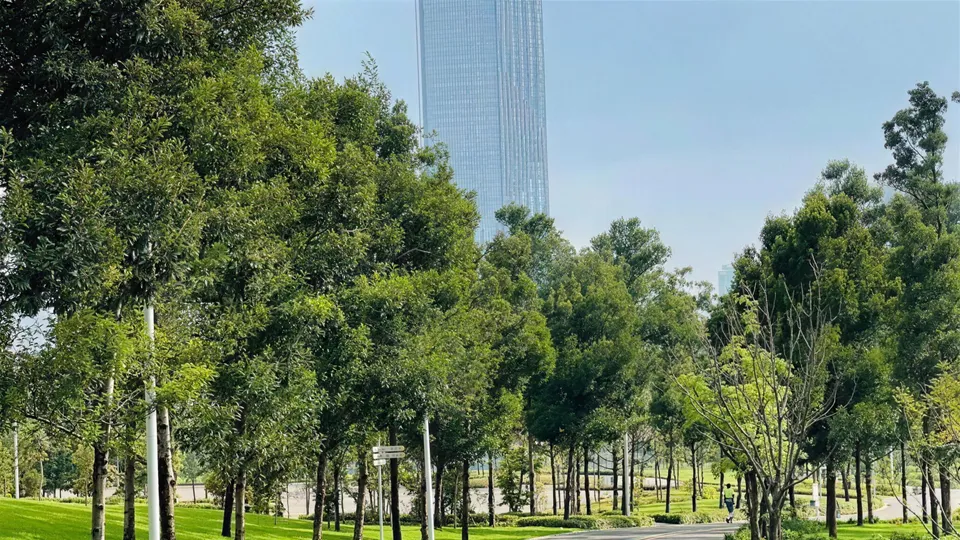
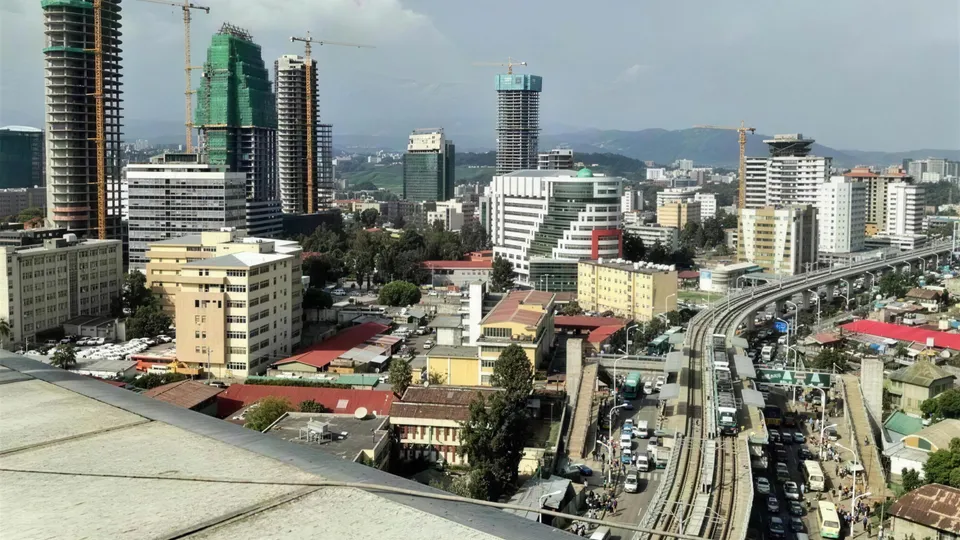
Twenty minutes up the mountain and 800 metres above the city: pine and eucalyptus forest, walking and cycling trails, horse riding, playgrounds and cafés. Entoto Maryam church and Menelik II's surprisingly modest palace sit among the trees, so a little history happens almost by accident.
Bring warm layers — at 3,200 m it is genuinely cold in the morning and evening — and expect everyone to sleep in the car on the way down. Time: a half day, easily.
4. The Red Terror Martyrs' Memorial Museum — for teenagers only
Small, free and deeply affecting: a documentation of the Derg's campaign of the late 1970s, with photographs, personal effects and, often, guides who are themselves survivors. It is not suitable for young children — the content is explicit about torture and mass killing — but for teenagers studying modern history it is among the most powerful hours available anywhere in Ethiopia. Prepare them beforehand.
5. Beyond the city: Adadi Mariam and Tiya
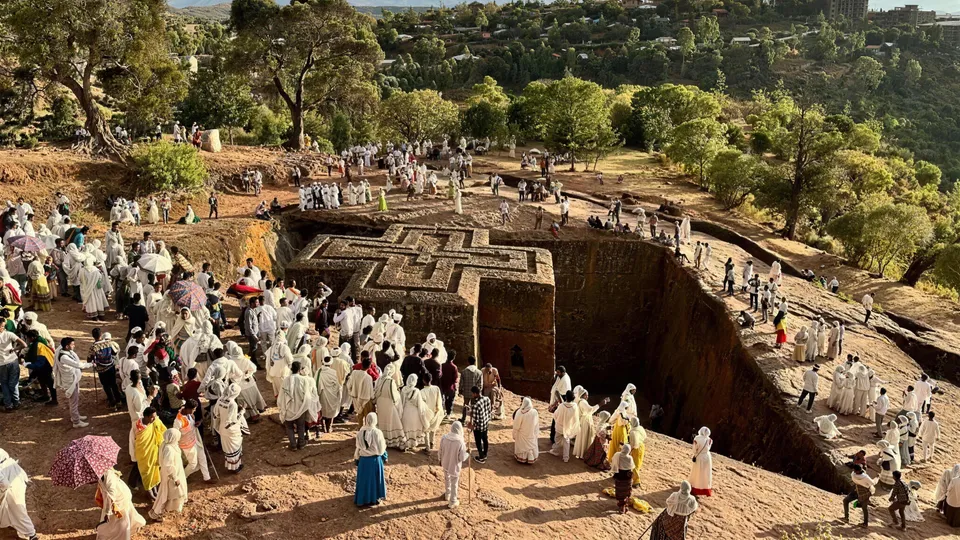
If you have a full day and children who can manage two hours in a car, Adadi Mariam is a rock-hewn church carved down into the ground in the Lalibela tradition — the same astonishing idea, two hours from Addis. Twenty minutes further, the UNESCO-listed Tiya stelae field holds 36 carved grave markers nobody has fully explained, which children tend to find far more interesting than adults expect. See weekend escapes.
How to make museum days work here
- Hire a guide and ask for stories, not dates. A few hundred birr, and the single highest-value decision of the day.
- Cap each museum at 45 minutes. Two short visits beat one long one; leave while they still want more.
- Check opening days. Many museums close Mondays, and Ethiopia has numerous public holidays on a calendar you may not recognise.
- Go in the morning. Altitude and afternoon heat flatten children faster than they flatten adults.
- Carry water, snacks and small notes — cafés inside museums are limited and nobody has change.
- Pair every museum with something physical — a garden, a park, a walk. This is the whole trick.
For where to eat afterwards, see family restaurants in Addis; for the wider list, family activities in Addis Ababa.