There is a city in eastern Ethiopia where the walls have kept out armies but never ideas — where 82 mosques share one square kilometre with churning coffee markets, where a French poet ran guns and grew old, and where every night, at the edge of the lamplight, wild hyenas pad in from the dark to be fed by hand. Harar is unlike anywhere in Ethiopia — arguably anywhere at all.
Key facts
- Location
- Eastern Ethiopia, 1,885 m; 525 km from Addis
- Getting there
- Fly Addis → Dire Dawa (1 hr) + 1.5 hr drive
- The old city
- Jugol: 1 km², 368 alleys, 82 mosques, 5 gates
- Famous for
- Hyena feeding, coffee, Rimbaud, walled-city life
- Time needed
- Two nights ideal
- UNESCO status
- World Heritage since 2006
Jugol: getting lost is the itinerary
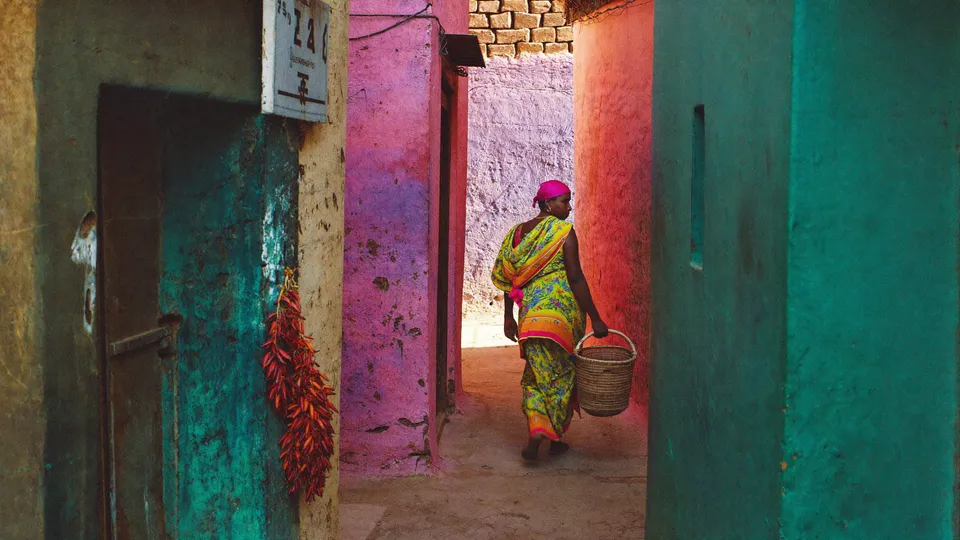
Harar's old city — Jugol — is a walled square kilometre of 368 alleys that were never planned, only accreted over a thousand years. The joy is surrendering to it: lanes narrow to shoulder width, walls painted turquoise, lilac and lime, doorways framing courtyards where women sort chillies and weave baskets. Landmarks to steer by: the 16th-century Grand Jami Mosque, the Feres Magala square, and the five historic gates. Hire a local guide for your first morning (~US$15–20, arranged via any hotel) to decode the shrine culture and the basket-hung interiors of a traditional Harari house — then spend the afternoon deliberately guideless.
The hyena men
After dark, outside the walls (traditionally at two sites, near Fallana Gate and the shrine of Aw Ansar), the hyena men call spotted hyenas out of the ravines by name. The practice began — the story goes — as a pact: feed the hyenas porridge during famine and they'd spare the livestock. Today it's meat from a stick, and if you kneel, from a stick held in your hand, with a wild apex predator's jaws a hand-span from your face. It is not a zoo trick; the animals come and go freely. Go with a guide around 7pm, pay the fee, and keep your movements slow.
Coffee, khat and Rimbaud
Harar coffee is among the most prized origins on Earth — wild-adjacent, wine-and-blueberry notes, dried in the sun on rooftops you'll walk past. Drink it at a traditional house ceremony or modern roasters in the new town. The city's other crop, khat, drives a frenetic morning market at Awaday nearby — fascinating to see, entirely optional to try. And in a restored Indian-merchant mansion, the Rimbaud House museum tells the strange second act of Arthur Rimbaud, who abandoned poetry at 21 and spent his last decade here trading coffee and guns. The rooftop view over Jugol's tin-and-thatch sea is the best in town.
Markets and the eastern wall
The Gidir Magala (main market) and the recycling market — where oil drums become stoves and tyres become sandals — show Harar's genius for reuse. Outside Erer Gate, camel caravans still arrive from the Somali lowlands. Climb to the wall's eastern viewpoint at sunset when the whole city glows ochre and the calls to prayer overlap from eighty minarets.
Practicalities
- Sleep inside Jugol: traditional Harari guesthouses (Zubeyda, Anisa) from ~US$25 — basket-lined walls, courtyard breakfasts. Comfortable modern hotels (Wonderland, Heritage Plaza) sit just outside.
- Eat: try harira soup during Ramadan evenings, stuffed sambusas, and the Harari version of fetira with honey.
- Dress & manners: modest dress reads as respect in this conservative town; ask before photographing people, and avoid pointing cameras into courtyards.
- Combine: Awash National Park en route by road, or the camel market at Babille (Mondays & Thursdays).