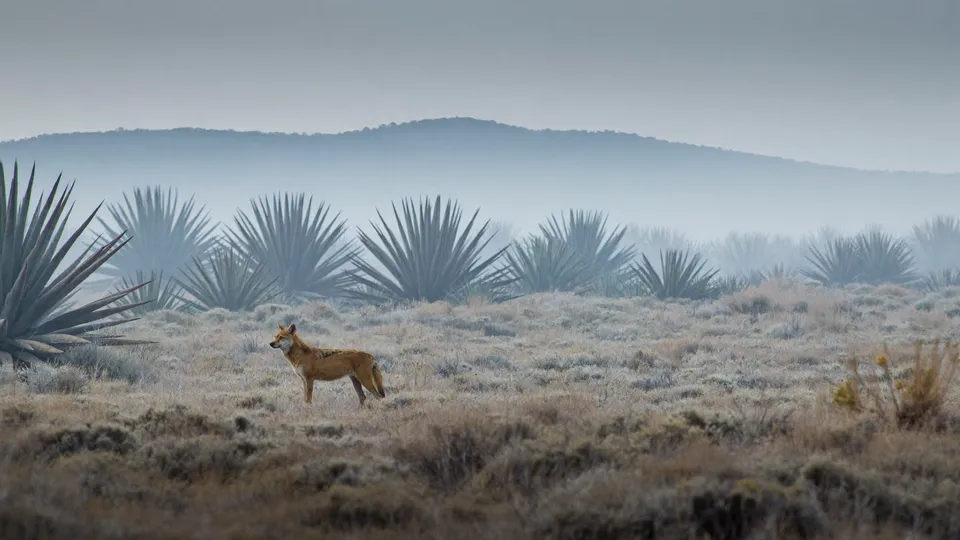
At four thousand metres above sea level there is a plateau that belongs to another planet — silver moorland studded with giant lobelia, air thin and glittering, and trotting across it on long legs, a rust-red wolf found nowhere else on Earth. The Bale Mountains hold more endemic mammals than almost any place its size on the continent, and almost nobody goes. That's the opportunity.
Key facts
- Location
- Oromia Region, southeast Ethiopia; HQ at Dinsho
- Getting there
- Fly Addis → Goba/Robe (~1 hr) or drive 5–6 hrs
- Star species
- Ethiopian wolf (~250 here), mountain nyala, giant mole-rat
- Key zones
- Sanetti Plateau (4,000 m), Harenna Forest, Dinsho
- Park fees
- ~US$5/day + vehicle & guide fees
- Best months
- November–March for wolf sightings
The wolf, and how to watch it
The Ethiopian wolf is the world's rarest canid: under 500 individuals, half of them here. Unusually for a rare carnivore it hunts by day, alone, for rodents — above all the comic, chunky giant mole-rat, another Bale exclusive. Strategy is simple: be on the Sanetti Plateau at first light with a thermos and patience. Scan the moorland edges; wolves patrol territories on regular beats and often cross the all-weather road itself. Your park guide (mandatory, ~US$15/day, arranged at Dinsho HQ or Goba) will know the active dens. Keep 50 m from dens, never follow a hunting wolf, and keep dogs' distance rules sacred — canine disease is the species' greatest threat.
Three worlds in one park
- Dinsho woodlands (3,100 m): park HQ, where mountain nyala — a kudu-sized antelope found only in these highlands — graze between juniper and hagenia trees, absurdly tame. Warthogs, Menelik's bushbuck and augur buzzards everywhere. Walk it on arrival day.
- Sanetti Plateau (3,800–4,377 m): Africa's largest afroalpine zone, crossed by the continent's highest road. Wolves, mole-rats, wattled cranes; on clear days you see a hundred kilometres. Tullu Dimtu (4,377 m), Ethiopia's second summit, is a short scramble off the road.
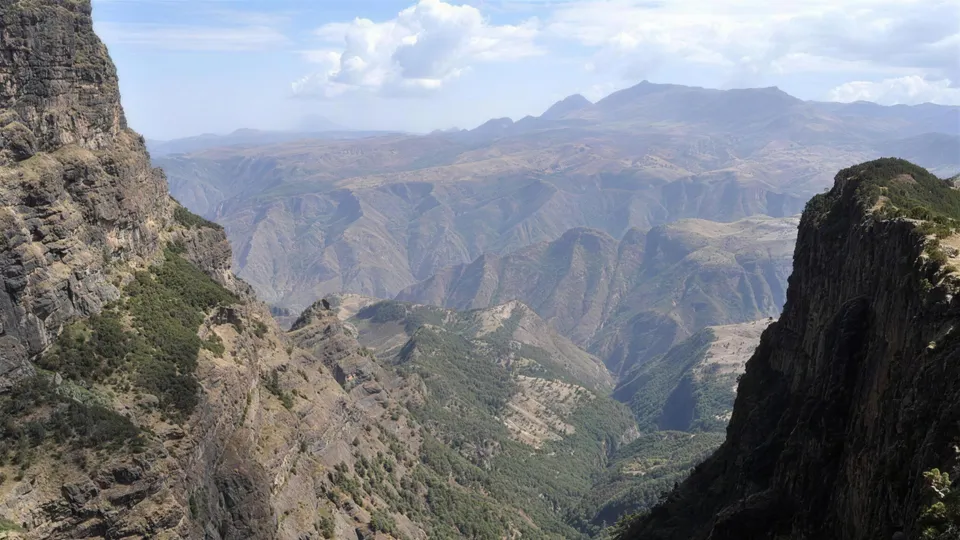
- Harenna Forest (2,400 m): over the plateau's southern rim the road plunges into a fairy-tale cloud forest — moss curtains, wild coffee, black-and-white colobus, and (rarely seen, thrillingly present) lions and Bale monkeys. The escarpment viewpoint at the rim is one of Ethiopia's great reveals.
Planning your visit
Most travellers base in Goba or Robe (fly from Addis ~1 hr, or drive 5–6 hrs through the Rift) and day-trip the zones, or stay at Bale Mountain Lodge inside Harenna's forest (boutique, ~US$250+) and the simple but well-placed Dinsho Lodge. A sensible shape: day 1 Dinsho walk, day 2 full Sanetti dawn-to-dusk, day 3 Harenna and back. Trekkers can do 3–6 day horse-supported routes via Web Valley and Rafu's rock pinnacles — arrange at HQ or through operators. Fees are modest: ~US$5/day entry, guide, and vehicle fees.
When: November–March is dry with frosty dawns (–7°C happens; the plateau by 10am is T-shirt weather). The rains (June–September) bring mist that can blank the plateau, though the forest turns luminous.
Bale is one of the best places in the country to camp — our camping guide covers the designated sites, permits and what to bring.