Ethiopia is a superb country to sleep outdoors in and a slightly awkward one to organise it in. The landscapes are extraordinary — escarpments falling away for a thousand metres, Afroalpine moorland above the tree line, crater lakes and acacia savannah — but there is no developed campsite network of the kind you would find in Kenya or South Africa, gear rental barely exists outside the trekking regions, and the national parks want you registered with a scout. Here is where you can actually camp, what each place is good for, and what to bring.
Key facts
- Closest to Addis
- Menagesha Suba Forest Park — juniper forest, marked trails, camping areas; day-trip range
- Best lakeside
- Lake Langano — the one Rift Valley lake safe for swimming; resorts and rough camping
- Best high-altitude
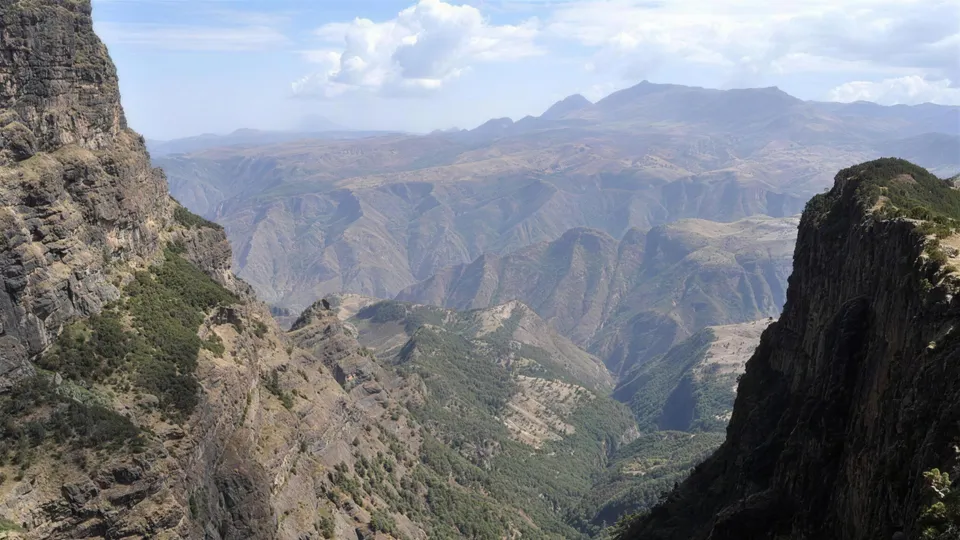
- Simien Mountains — Sankaber, Geech and Chenek camps along the escarpment
- Best wildlife
- Bale Mountains — Dinsho headquarters and the Sanetti Plateau for Ethiopian wolves
- Crater camping
- Wenchi Crater Lake — horses, boats and a monastery island, ~3 hours from Addis
- Rules
- National parks require a registered scout or guide; camping is at designated sites only
- Bring your own
- Gear rental is limited outside Simien and Bale — assume you carry everything
Within a day of Addis Ababa
Menagesha Suba Forest Park is the obvious first answer, about an hour and a half west of the capital. It is one of the oldest conserved forests on the continent, planted and protected since the fifteenth century, and it holds juniper and podocarpus woodland, marked hiking trails, good birdlife and designated camping areas. It is the closest thing to a proper campsite within easy reach of the city.
Wenchi Crater Lake, roughly three hours west, is the more dramatic overnight: a flooded volcanic caldera with a monastery on an island, hot springs, and horses to carry you down the steep rim path and back up again. Entoto Natural Park, on the ridge directly above Addis, has forest trails, streams and picnic glades but functions as a day-use park rather than a place to pitch a tent — see our Addis parks and picnic guide.
The Rift Valley lakes — the classic weekend
Lake Langano is the one people drive to, because its mineral-stained brown water is considered free of bilharzia and it is the Rift lake where swimming is normal. The shore carries a mix of established resorts and informal camping ground, and you can usually arrange to pitch a tent on resort land for a fee. Lake Ziway is shallower, greener and far better for birds, with pelicans and storks at the jetty. Abijatta-Shalla National Park sits between them, with flamingo flocks and hot springs.
All of them sit at a much lower altitude than Addis, which means warm nights and mosquitoes — bring repellent and consider antimalarials for the Rift, which our insurance and health guide discusses. Our weekend escapes guide has the drive times and named places to stay.
The Simien Mountains — the great trek
This is the reason most people bring a sleeping bag to Ethiopia. The Simien escarpment is a thousand-metre drop along a ragged rim, with gelada monkeys grazing in troops of hundreds, walia ibex on the cliffs and lammergeier vultures riding the updraughts. Camping is at designated sites: Sankaber, Geech and Chenek, positioned so that a multi-day traverse links them, each with basic facilities and views that justify the cold.
You need an entry fee and a registered scout, and most trekkers add a guide, a cook and mules to carry loads. Nights are genuinely cold — Chenek sits above 3,600 m and can frost. Our Simien trekking guide covers routes, costs and acclimatisation, and Debark tours covers the gateway town.
Bale Mountains — wolves, moorland and forest
Bale is the quieter, wilder alternative and the best place in the world to see the Ethiopian wolf, the rarest canid on earth. The park headquarters at Dinsho is the usual base, with mountain nyala and warthog grazing around the lodge grounds. Above sits the Sanetti Plateau, an Afroalpine moorland of giant lobelia crossed by the highest all-weather road in Africa, and beyond it the Harenna Forest drops away into cloud forest where wild coffee grows. Camping is possible at designated sites with park permission.
Savannah and lowland parks
Awash National Park, on the road east, combines the Awash Falls, acacia savannah, oryx and kudu, and hot springs at Filwoha. Nechisar National Park near Arba Minch sits on the isthmus between Lakes Abaya and Chamo, with the famous "bridge of God" ridge, zebra on the plains and enormous crocodiles in Chamo. Both offer camping at designated sites, and both are hot and low — a completely different packing problem from the highlands. See our Awash guide and Arba Minch and Konso guide.
The Danakil — camping, but not as you know it
Every Danakil trip involves sleeping outdoors, usually on a rope bed under the stars beside Erta Ale's lava lake or on the salt flats at Dallol, because there is nowhere else to sleep. This is not independent camping: it is done as an organised convoy with permits, an armed escort and a local guide, and it is one of the hottest inhabited places on earth. Read our Danakil guide and current safety assessment before committing.
What to bring
- A warm sleeping bag. Three-season minimum for the highlands; the mistake almost everyone makes is packing for "Africa".
- Insulated mat and thermal layers. The ground at 3,500 m takes heat out of you all night.
- Sun protection. Equatorial sun at altitude burns faster than you expect, even when the air is cold.
- Water filter or purification tablets. Assume you are treating what you find.
- Head torch and power bank. Mains power at camps is intermittent at best.
- Cash in small notes. Fees, scouts, mules and community payments are all cash — see our money guide.
The full list, season by season, is in our packing guide, and timing matters more than most people realise — the main rains from late June to early September make trekking and camping genuinely unpleasant in much of the country. Our best time to visit guide breaks it down month by month.