Debark is a scruffy highland town with one job: it is the door to the Simien Mountains, the most spectacular trek in Ethiopia. Here you pick up the scout the park requires, and choose your ambition — a half-day rim walk among four hundred grazing geladas, or a week-long traverse to the roof of the country. Here's how the tours work, what they cost, and which route to pick.
Key facts
- What Debark is
- Park HQ & trailhead town (2,800 m)
- Getting there
- ~3 hrs by road from Gondar (100 km)
- Mandatory
- Armed scout for every group (~US$8/day)
- Sweet-spot trek
- Sankaber → Geech → Chenek (3–4 days)
- Highest point
- Ras Dashen, 4,543 m — Ethiopia's roof
- Wildlife
- Gelada monkeys, walia ibex, lammergeier
From day hike to full traverse
| Days | Route | Who it suits |
|---|---|---|
| 1 | Drive-in rim walk near Sankaber | Day-trippers from Gondar |
| 3–4 | Sankaber → Geech → Imet Gogo → Chenek | The sweet spot: best views, geladas, walia |
| 6–7 | Above + Bwahit (4,430 m) & descent villages | Fit hikers wanting solitude |
| 8–10 | Full crossing incl. Ras Dashen (4,543 m) | Peak-baggers; long days at altitude |
The full route notes, packing list and altitude advice are in our Simien Mountains trekking guide.
How it's organised at Debark
Debark sits about three hours by road from Gondar (the nearest airport). At the park HQ you settle entry and camping fees and take on your armed scout (mandatory, ~US$8/day); a guide (~US$25–30/day) is optional but transforms a multi-day trek, and mules carry gear on longer routes. A fully organised 4-day trek — guide, scout, cook, mules, food, transfers — runs roughly US$300–450 per person in a small group through a reputable operator.
What you'll see
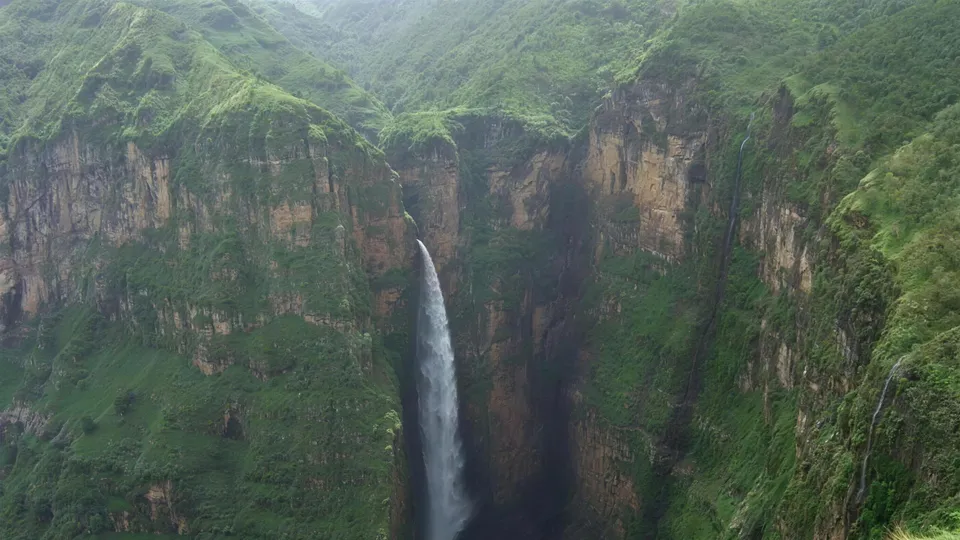
The northern escarpment is a near-continuous kilometre-high cliff, and every day follows its rim from one impossible viewpoint to the next. The wildlife is the other half: gelada 'bleeding-heart' monkeys in huge grazing bands you can sit beside, walia ibex below the cliffs (the whole world population lives here), Ethiopian wolves on the high plateaux, and lammergeiers overhead. Camps sit at 3,250–3,600 m; nights are cold (–5°C at Chenek is normal).
When to go & how it fits
October–November is the jackpot — post-rains green, wildflowers, washed-clean air; December–March is drier and dustier but reliably clear. Most travellers pair Gondar and the Simiens as the heart of the classic 10-day northern circuit. Ensure your travel insurance covers trekking above 4,000 m — many standard policies cap out at 3,000 m.