The Blue Nile — the river that waters Sudan and Egypt and once decided the fate of empires — begins as a quiet spill from the corner of a lake in the Ethiopian highlands. On that lake's islands, monks have painted their churches with saints and dragons for six hundred years, and fishermen still paddle boats of bundled papyrus. Bahir Dar, the palm-lined city on the shore, is the gentlest stop on Ethiopia's northern circuit — and the most underrated.
Key facts
- Location
- Bahir Dar, Amhara Region (1-hr flight from Addis)
- The lake
- Ethiopia's largest — 84 km across, source of the Blue Nile
- Monasteries
- 20+ island/peninsula churches, 14th c. onward
- The falls
- Tis Abay ('Smoking Water'), 30 km from town
- Time needed
- 2 days: lake day + falls half-day
- Boat trips
- Half-day shared ~US$15–25 pp; private ~US$60+
The island monasteries
Lake Tana's twenty-plus monastic churches survived centuries of war precisely because they were hard to reach; the isolation that protected them now makes the visit. The classic half-day boat trip crosses to the Zege Peninsula through coffee forest alive with vervet monkeys and hornbills. At Ura Kidane Mihret, the great round church's inner drum (maqdas) is painted floor to ceiling — battle scenes, punished sinners, saints on horseback, a graphic-novel Bible in reds and golds, mostly 18th–19th century. Azwa Maryam nearby is quieter and nearly as fine. Entry runs Br 200–300 per church; a small tip to the priest who unlocks the drum is customary. Modest dress; some other monasteries (Kibran Gabriel, Tana Cherkos) admit men only — Zege's main churches welcome all.

Where the Blue Nile begins
Boat trips usually detour to the lake's southeastern corner where the water quickens and slides out as the Abay — the Blue Nile itself, beginning a 5,000 km journey to the Mediterranean. Hippos surface here at dusk. It's a subtle sight with an unsubtle thought attached: everything downstream, Khartoum to Cairo, starts at this reed-lined gap.
Tis Abay: the Smoking Water
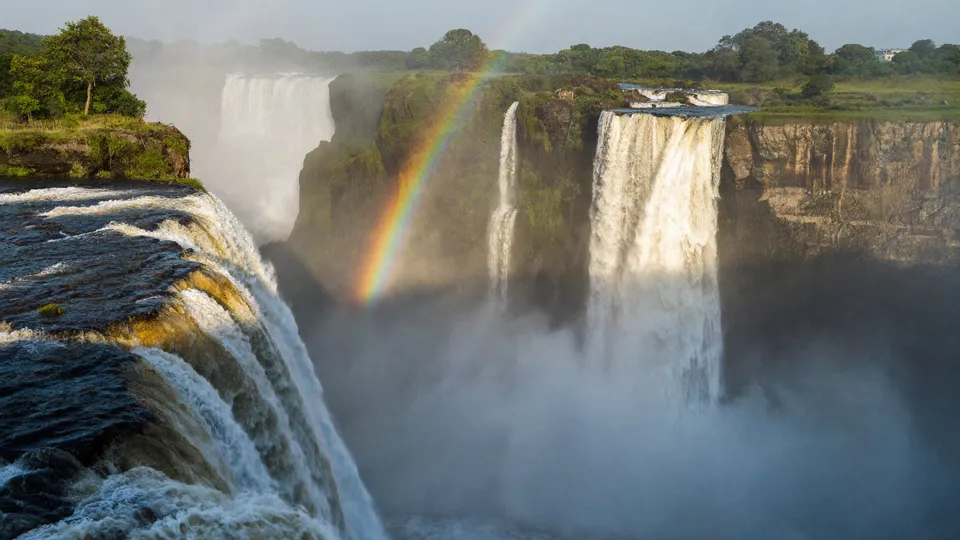
Thirty kilometres downstream, the young river throws itself off a basalt ledge at Blue Nile Falls. In full flow (July–October, and often beyond) it's a 400-metre-wide brown-gold curtain wrapped in permanent rainbow mist — the "smoke" of its Amharic name. A hydro plant upstream takes a variable share, so dry-season visits can underwhelm; ask locally first. The visit is a pleasant loop: drive to the village, walk 30–40 minutes via the 17th-century Portuguese bridge, cross the gorge, and return by boat. Guides and boys will offer help you don't strictly need; a firm, friendly aydelem ("no thanks") works.
Bahir Dar itself
Wide palm avenues, a lakeside promenade, pelicans drifting past juice bars — Bahir Dar is Ethiopia's most relaxed city. Do: the vast Sunday market (weavers' quarter especially), sunset at the Bezawit Palace viewpoint above the Nile's first bend, avocado-mango juice layered like a sunset, and fresh lake fish at Desset Lodge. Sleep: Kuriftu Resort (lakefront spa comfort, ~US$120), Jacaranda or Addis Amba mid-range, plenty of US$20 guesthouses.