At the very bottom of Ethiopia, where the Omo River finally reaches Lake Turkana, lies Omorate — the last stop of the Omo Valley circuit and the gateway to the Dassanech, the 'people of the delta'. Getting there involves a passport, a permit and a dugout canoe across the river. Here's how the visit works and how to fit it into a southern loop.
Key facts
- What Omorate is
- Southernmost Omo town, near Lake Turkana
- The visit
- Cross the Omo River to a Dassanech village
- The crossing
- Dugout canoe (or the road bridge)
- Paperwork
- Passport + permit at the Omorate immigration office
- Distance
- ~72 km from Turmi (~1.5–2 hrs)
- Best paired with
- Turmi & the Hamar country to the north
The Dassanech river crossing
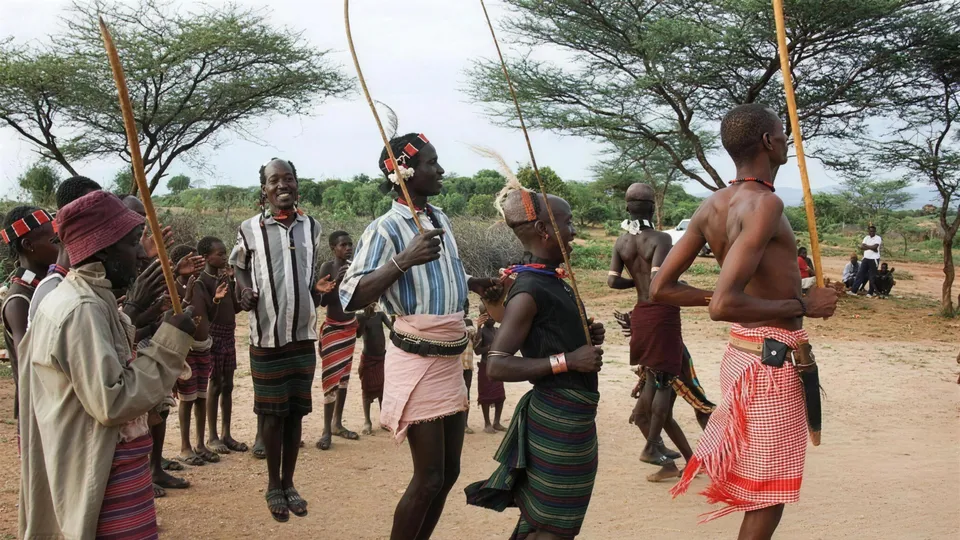
The reason to come to Omorate is a visit to a Dassanech village on the far bank of the Omo. The trip has a distinctive rhythm: drive down from Turmi, register your passport and collect a permit at the Omorate immigration office (the town sits near the Kenyan border, so this is required), then cross the river by dugout canoe — a memorable few minutes in a hollowed log — or the newer road bridge, to reach the low domed huts of a Dassanech community. A local guide arranges the boat and village fees. The broader etiquette that makes these visits welcome is in our Omo Valley guide.
How it fits the southern circuit
Omorate is a half-day out-and-back from Turmi (about 72 km each way), and it's the natural southern turning point of the Omo loop. A typical shape: Jinka for the Mursi and markets, Turmi for the Hamar, Omorate for the Dassanech, then back north. See our Turmi and Jinka pages for the rest of the loop, and the southern natural wonders guide for Arba Minch and Konso.
Practical notes
There's no useful public transport this far south; you'll be travelling by private 4x4 with a driver-guide arranged in Arba Minch or Jinka. Bring your passport (essential for the Omorate permit), cash in birr for permits, boat and photo fees, sun protection and plenty of water — this is hot lowland country, best visited September–March and always early in the day. Photograph people only with permission, agreed calmly through your guide.