In January 2026 Ethiopia broke ground on what is set to become the largest airport in Africa: a roughly US$12.5 billion mega-hub at Abusera, near Bishoftu, about 40 km south-east of Addis Ababa. Designed by Zaha Hadid Architects and eventually sized for some 110 million passengers a year, it is one of the most ambitious infrastructure projects on the continent. Here is what is actually being built, when it opens — and, importantly, what it does and doesn't change for anyone travelling to Ethiopia right now.
Key facts
- What
- Bishoftu International Airport — Ethiopia's new mega-hub, Africa's largest
- Where
- Abusera, near Bishoftu (Debre Zeyit), ~40 km south-east of Addis Ababa
- Cost
- About US$12.5–12.7 billion — the largest airport project on the continent
- Broke ground
- 10 January 2026, led by PM Abiy Ahmed
- Phase One
- Targeted for 2030 — around 60 million passengers a year
- Full build
- Up to ~110 million passengers a year; designed by Zaha Hadid Architects
- For travellers now
- Nothing changes yet — you still fly into Bole (ADD)
What is being built
Bishoftu International Airport is a greenfield mega-hub at Abusera, near the town of Bishoftu (Debre Zeyit), roughly 40 km south-east of Addis Ababa. Ethiopian Airlines and the government held the groundbreaking on 10 January 2026, led by Prime Minister Abiy Ahmed. The headline numbers are genuinely large:
- Cost: around US$12.5–12.7 billion, the biggest airport project in Africa.
- Phase One: targeted for 2030, handling about 60 million passengers a year.
- At full build: capacity of roughly 110 million passengers a year.
- Design: by Zaha Hadid Architects — the practice behind Beijing Daxing — drawing on the Great Rift Valley, with a central spine, natural ventilation, solar shading and locally sourced materials.
The part most articles bury: nothing changes for your trip yet
If you are planning a visit in 2026, 2027 or 2028, you will still fly into Addis Ababa Bole International (ADD). Phase One is years away. Your booking, your e-visa, your arrival routine and your transfer into the city are all unchanged. What you actually need for the trip you're taking now is our Bole airport survival guide — the two security screenings, the currency rules and the luggage advice that catch people out.
Why Ethiopia is building it
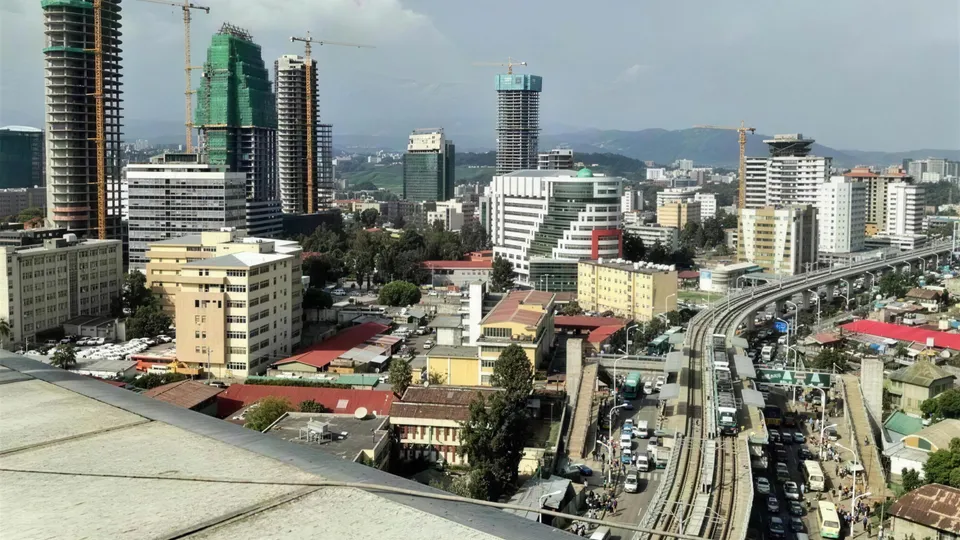
Because Bole is full. Addis Ababa has become the principal connecting point between Africa and the rest of the world, carried there by Ethiopian Airlines — the continent's largest carrier. Bole is boxed in by the city and cannot expand much further, while demand keeps climbing: Addis welcomed nearly 700,000 foreign visitors in the first half of the 2025/26 fiscal year, up around 15% year on year, and the airline continues adding routes such as Lyon and Mauritius. A phased greenfield site is the only way to build the capacity that trajectory implies.
What it should mean for travel to Ethiopia
Assuming it lands broadly on schedule, the effects travellers should care about are: more seats and more routes into the country, a modern gateway feeding the historic circuit — Lalibela, Axum, Gondar, the Simien Mountains and the south — and less of the congestion that currently makes a tight Bole connection stressful. For now, the practical way to reach those sites is still the domestic network from Bole, with the Ethiopian Airlines domestic discount explained in our domestic flights guide.
A traveller's footnote: Bishoftu is worth visiting anyway
There is a nice irony in the location. Bishoftu — Debre Zeyit — is already one of the easiest and most popular weekend escapes from Addis, built around a cluster of volcanic crater lakes with lakeside resorts, cafés and birdlife, about an hour from the capital. Long before the first aircraft lands there, it's somewhere to spend a day or a night. Our weekend escapes guide and parks and picnic spots guide both cover it.
Timeline at a glance
- 10 January 2026 — groundbreaking at Abusera.
- 2026–2029 — construction; all flights continue to use Bole (ADD).
- ~2030 — Phase One targeted, ~60 million passengers a year.
- Beyond — build-out toward ~110 million passengers a year.
Treat every date as a target rather than a promise — megaprojects of this size move. For planning any Ethiopia trip in the meantime, start with our 10-day itinerary and the region-by-region safety guide.