Above Arba Minch the land climbs into cool, green hills where the Dorze people build some of the most distinctive homes in Ethiopia: tall, woven houses that look like giant beehives. This guide explains what you will see, when to go, how to visit respectfully and how to fit it with the rest of the south.
Quick answer
The Dorze are a Gamo-highlands people famous for tall, woven houses shaped like beehives, often described as reaching around 10 m, built from bamboo and enset (false banana) leaves, plus cotton weaving. Villages sit in the cool hills above Arba Minch, with Chencha as the highland town and market centre, roughly an hour or more by road depending on conditions. Go with a local guide, visit on a market day if you can, bring small birr notes for fees, purchases and tips, and ask before photographing people. Opening days, fees and market days are reported inconsistently, so confirm locally.
Key facts
- Who
- The Dorze, a Gamo-highlands people known for weaving and enset farming
- Famous for
- Tall beehive-shaped houses of bamboo and enset leaves; handwoven cotton cloth
- Where
- Highlands above Arba Minch; Chencha is the nearby market town
- Getting there
- About an hour or more by road from Arba Minch, depending on road and stops
- Altitude/weather
- Cooler and often misty; bring a layer and rain cover
- Market days
- Reported inconsistently — often Saturday for Dorze and Monday/Saturday for Chencha; confirm locally
- Fees
- Village entry/guide and demonstration fees vary; carry small birr notes
- Last reviewed
- 14 November 2026
Who the Dorze are
The Dorze are part of the wider Gamo-highlands world of southern Ethiopia, known for farming enset (false banana), the starchy staple behind kocho bread, and for skilled cotton weaving. Their villages are a living community rather than a museum, which is why respectful behaviour matters.
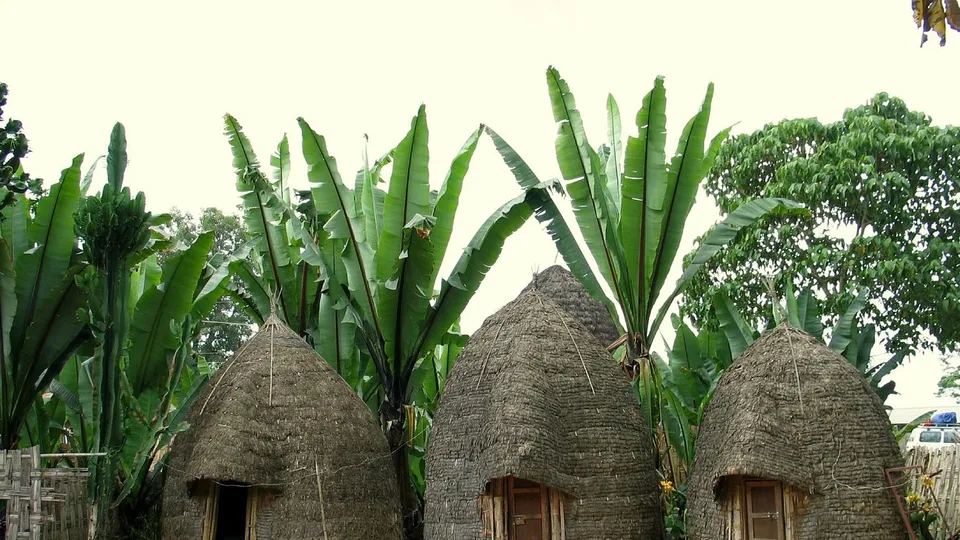
The beehive houses
- Shape and height: tall, domed, bamboo-framed houses covered in enset leaves, often described as around 10 m high.
- Materials: bamboo and enset are renewable; termites eat the base over time, so houses can be repaired or moved.
- Inside: a family space, a hearth and sometimes animals; hosts may demonstrate cooking and weaving.
What to do
- Visit a Dorze village with a local guide and see the houses and workshops.
- Watch cotton being spun and woven, and buy directly if you like the cloth.
- Try enset bread and local honey spirits only if you are comfortable with hygiene; ask for food made fresh.
- Continue to Chencha for the market and highland views, ideally on a market day.
Market days and timing
| Place | Reported market day |
|---|---|
| Dorze | often Saturday |
| Chencha | often Monday and Saturday |
These days are reported inconsistently; confirm in Arba Minch before you set out. Start early, carry a rain layer and expect the weather to be cooler and mistier than in the lowlands.
Getting there and booking
Most visitors hire a driver in Arba Minch for a half or full day; self-driving is possible but the mountain road needs care. Book your base first, then add the Dorze day. For wider southern routes see the 7-day Rift Valley itinerary and the Konso and Arba Minch guide.
Respectful photography
- Ask first, agree any fee first, and accept a no.
- Do not hand out sweets, pens or money to children.
- Buy directly from weavers and tip hosts for demonstrations.