Ethiopia does not do the classic safari — and that's exactly the point. Its highlands have been isolated for so long that they've evolved their own cast of creatures found nowhere else on Earth: a grass-grazing monkey that lives in herds of hundreds, the rarest wolf on the continent, a cliff-dancing ibex. For travellers who've done the plains and want something rarer, Ethiopia is one of Africa's most distinctive wildlife destinations. Here's what lives here, where to find it, and how to see it responsibly.
Key facts
- The headline
- Ethiopia has more endemic large mammals than any African country
- Gelada
- The world's only grass-eating primate — Simien Mountains, in huge herds
- Ethiopian wolf
- Africa's rarest carnivore (~500 left) — Bale Mountains' Sanetti Plateau
- Walia ibex
- Endemic wild goat of the Simien cliffs — nowhere else on Earth
- Also endemic
- Mountain nyala, Menelik's bushbuck, gelada, ~30+ endemic birds
- Where to go
- Simien (north) for geladas & ibex; Bale (south) for the wolf
Why Ethiopia's wildlife is unlike anywhere else
Ethiopia's highlands rise like islands above the surrounding lowlands, and that isolation is an evolutionary engine. The result is a country with more endemic large mammal species than any other in Africa — animals that exist here and nowhere else. This isn't a lions-and-elephants safari (though those exist in the lowland parks); it's a rarer, more particular kind of wildlife travel, done on foot in spectacular mountain scenery, and far less crowded than East Africa's circuits.
The gelada — the "bleeding-heart" monkey
The gelada is the one everyone falls for. Found only in the Ethiopian highlands and most spectacularly in the Simien Mountains, it's the world's only truly grass-grazing primate, living in herds that can number in the hundreds. You can sit quietly on a ridge as an entire troop grazes around you — males with flowing capes and a scarlet chest patch, families grooming, youngsters tumbling. It's one of the great primate encounters anywhere, and utterly reliable in the Simien. Our Simien trekking guide covers how to get among them.
The Ethiopian wolf — Africa's rarest carnivore
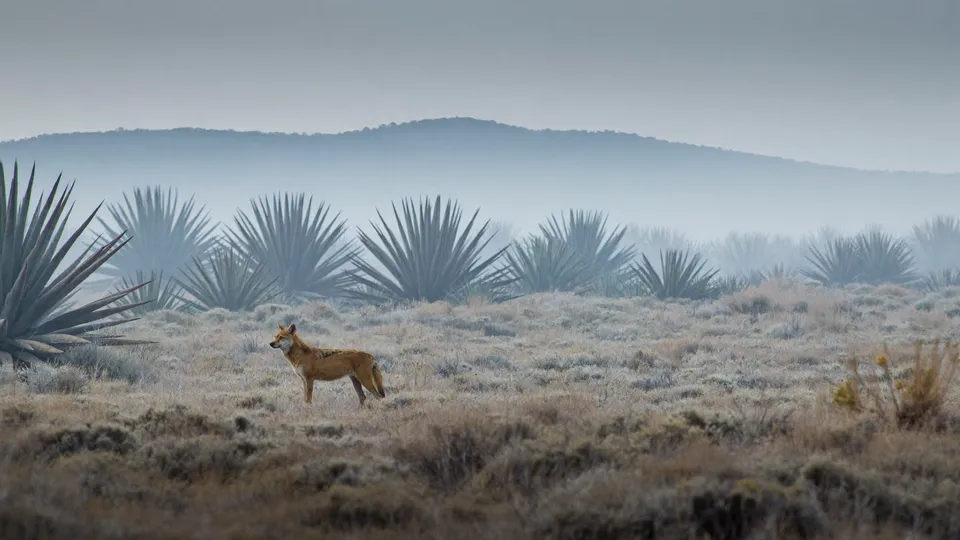
Slender, russet-red and improbably elegant, the Ethiopian wolf is the most endangered carnivore in Africa, with only around 500 left in the world. The place to see it is the Bale Mountains in the south — specifically the high Sanetti Plateau, above 4,000 metres, where wolves hunt giant mole-rats across open Afroalpine moorland, which makes them unusually watchable for so rare an animal. Sightings are near-reliable with an early start in the dry season. Our Bale Mountains guide is the detailed how-to.
The Walia ibex and the highland supporting cast
The Walia ibex, a magnificent wild goat that lives on the sheer Simien escarpment, exists nowhere else on Earth and is the emblem of the park. Alongside it: the mountain nyala (a large, handsome antelope endemic to the southern highlands), Menelik's bushbuck, the endemic Bale monkey, and a birder's dream of 30-plus endemic bird species — from the blue-winged goose to the thick-billed raven. Ethiopia is quietly one of Africa's top birding countries, and the two mountain parks are the epicentre.
Where to go, in short
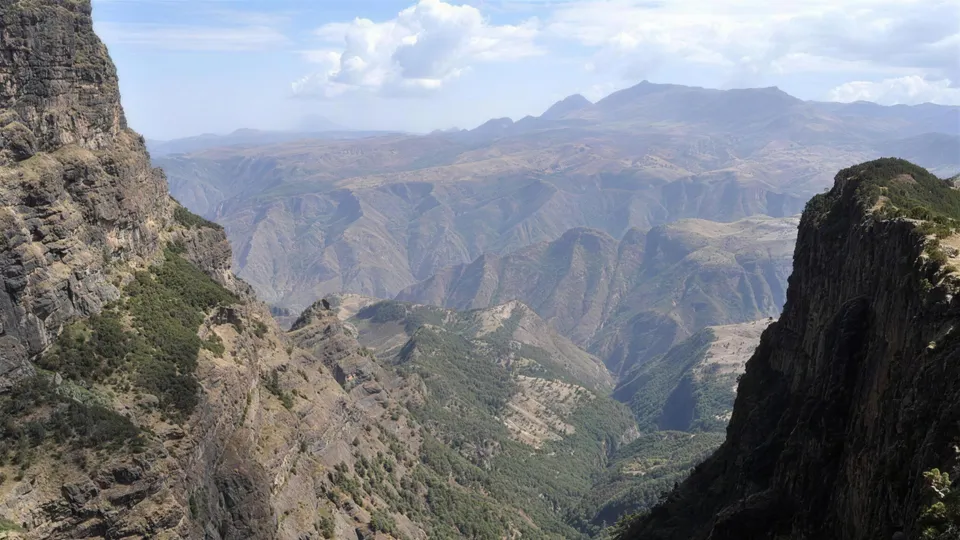
- Simien Mountains (north): geladas in their hundreds, Walia ibex, dramatic escarpment scenery. Paired with the historic north.
- Bale Mountains (south): the Ethiopian wolf, mountain nyala, Bale monkey and Harenna Forest. Paired with the Rift lakes and the south.
- Lowland parks (Awash, Nechisar, Omo region): more classic game — see our Awash tours guide — though not on the scale of East Africa.
Two national parks, north and south, deliver almost the entire endemic cast. The rest of the country's magic is human and historical; the wildlife is the wild thread running through it.
Seeing it responsibly
These are fragile, rare populations, so how you watch matters:
- Keep your distance and never feed or approach — especially the wolves, where habituation and disease from domestic dogs are the biggest threats to the species.
- Go with a specialist guide and the park scouts; it's required in the parks anyway, and it's how you actually find the animals.
- Choose the dry season (roughly October–March) for access and sightings, and start early when animals are active.
- Your park fees fund conservation — this is tourism doing genuine good for species with nowhere else to go.
Come for the endemics, stay for the scenery, and leave having seen animals that a fraction of travellers ever will. Fold a mountain park into your route with our 10-day itinerary, and read the best-time guide to line up the dry-season window.