The coffee ceremony is the ritual; this is the bean. Coffee was born in Ethiopia — genuinely, botanically, historically — and for anyone who takes it seriously, tasting Yirgacheffe on the hillside where it grows, or watching Harrar coffee dried on raised beds in the eastern sun, is a pilgrimage. This is a guide to Ethiopia's great coffee regions, what each one tastes like, where to visit a farm, and how to carry the best beans of your life home.
Key facts
- The birthplace
- Coffee arabica originated in Ethiopia's southwestern forests
- Famous regions
- Yirgacheffe, Sidama, Guji, Harrar, Limu, Jimma
- Yirgacheffe
- Floral, tea-like, citrus — the connoisseur's favourite
- Harrar
- Dry-processed, wild, blueberry-and-wine notes from the east
- Farm visits
- Best around Yirgacheffe & Sidama in the southern coffee belt
- Taking it home
- Buy roasted or green beans; keep receipts for customs
The origin, for real
Ethiopia isn't just a coffee producer; it's the origin. Coffea arabica is native to the highland forests of the southwest, where it still grows wild, and Ethiopia holds more coffee genetic diversity than the rest of the world combined. Every arabica cup on Earth traces back here. That heritage is alive: coffee is central to daily life, hospitality and the economy, and the three-round coffee ceremony remains a national ritual. This guide is about the other half of the story — the growing regions and their flavours.
The great regions, and how they taste
- Yirgacheffe — the star. Washed coffees of astonishing delicacy: floral, tea-like, jasmine and citrus. If you've had a "surprisingly light and fragrant" Ethiopian coffee, it was probably this.
- Sidama (Sidamo) — the broad, celebrated southern region around Yirgacheffe; bright, balanced, berry-and-citrus, immensely food-friendly.
- Guji — a neighbour that's become a specialty darling: vivid, fruit-forward, often stunning natural-process lots.
- Harrar — the eastern outlier. Dry-processed (natural), wild and bold, with blueberry, wine and spice notes. A completely different character.
- Limu and Jimma — the southwestern historic heartland; balanced, winey, and where much of the wild-forest coffee still comes from.
Visiting a coffee farm
The most accessible coffee tourism is in the southern belt around Yirgacheffe and Sidama, reached via Hawassa in the Rift Valley. Washing stations, cooperatives and smallholder farms welcome visitors; you can walk the shaded plots, see the cherries picked, washed and dried, and cup fresh coffee at the source. It folds beautifully into a southern loop with the Rift lakes, and increasingly into the Omo Valley route. Harrar offers a different, drier experience in the east, best combined with the walled city of Harar Jugol.
A guided visit is worth it here: farms are spread out, the processing steps need explaining to mean anything, and a good guide gets you onto real working farms rather than a staged stop.
Drinking it there
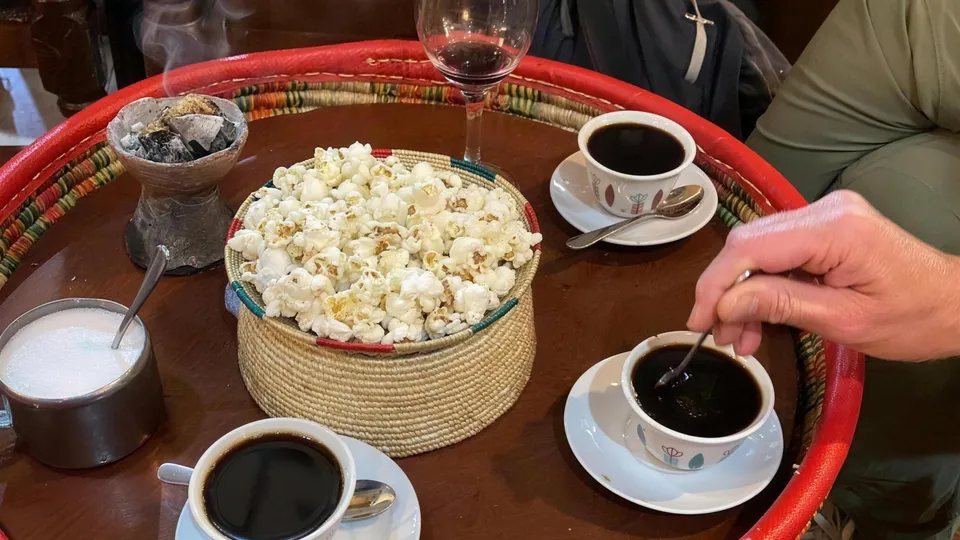
Everywhere you go, order a macchiato (a legacy of the Italian era and quietly excellent), a traditional buna from a ceremony, or a spris (layered coffee and tea). Addis has a fast-growing third-wave scene of specialty cafés roasting single-origin lots — a fascinating contrast with the charcoal-brazier ceremony happening on the same street. Our guides to Addis cafés and culture and the coffee ceremony go deeper.
Taking the beans home
Ethiopian coffee is one of the great souvenirs — better and cheaper at source than anywhere. A few tips:
- Roasted vs green. Roasted beans are ready to grind and brew; green (unroasted) beans keep for months and are the move if you roast your own or want them to last.
- Buy well. Reputable shops, cooperatives and the airport all sell it; keep the receipt for customs.
- Check your allowance. Most countries allow generous personal amounts of roasted coffee, but confirm your home rules before loading up.
- Pack whole beans, not ground — they travel better and won't scent your whole bag.
The bottom line
You can experience Ethiopian coffee three ways, and the best trips do all three: drink it constantly in cafés and ceremonies, understand it through its regions, and — if you can — stand in a Yirgacheffe grove where the world's coffee began. Then carry a kilo of it home and taste the trip again every morning.