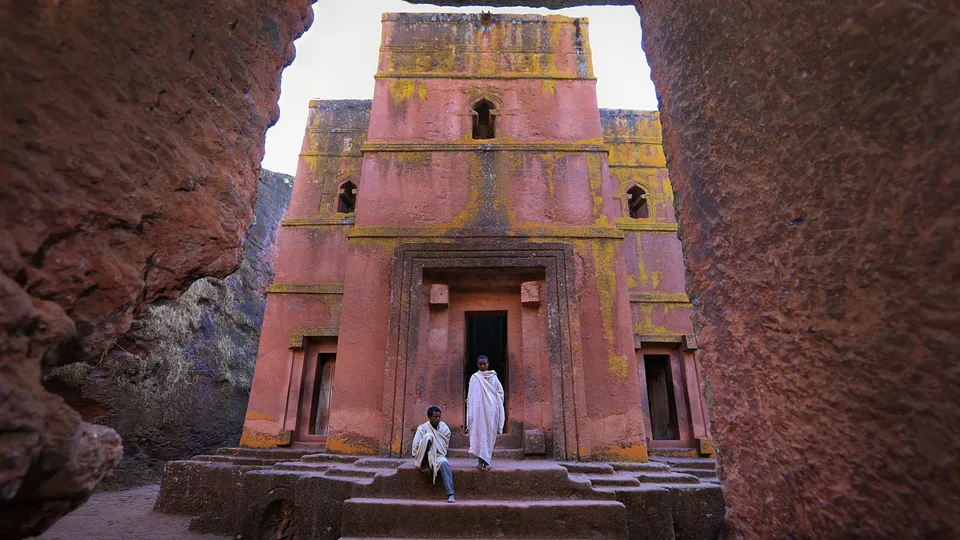
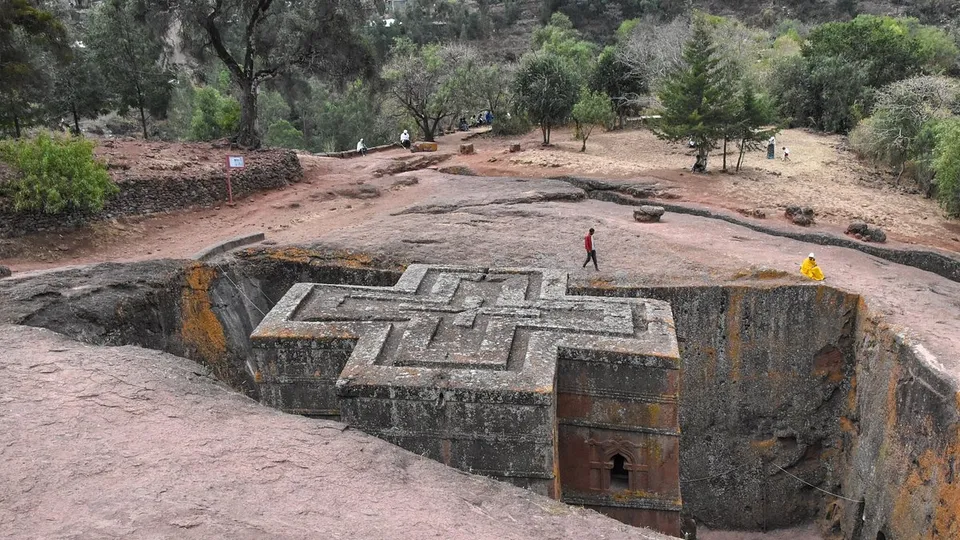
Seen from above, Bete Giyorgis looks like a stone cross set in the ground. This guide explains how it was carved, what is documented and what is tradition, how to read the cross shape, and what to know about light, etiquette and the current advisory position.
Quick answer
Bete Giyorgis (the Church of St George) is the best-known of Lalibela's rock-hewn churches: a monolith carved downward into a pit of volcanic tuff so that its roof sits at ground level and the whole building forms a Greek-style cross, usually described as about 12 m tall. Tradition links the churches to King Lalibela in the late 12th or early 13th century; the exact dates and methods are not documented with certainty. Visit early for softer light and fewer crowds, wear modest clothing, remove shoes and expect to pay the Lalibela site ticket. Lalibela lies inside Amhara, which government advisories currently warn against, so treat this guide as research and check the live advisory page before any planning.
Key facts
- What
- Bete Giyorgis, the Church of St George, one of 11 rock-hewn churches at Lalibela
- Shape
- Carved downward as a monolith in a Greek-style cross; roof level with the ground
- Height
- Usually described as about 12 m; measurements vary by source
- Date
- Traditionally attributed to King Lalibela around the late 12th/early 13th century; exact dating and methods are not certain
- Setting
- Standalone in its own pit, in the southwest group of churches, reached by a trench and steps
- Best time
- Early morning for softer light and fewer visitors
- Dress
- Modest clothing; shoes off; keep voices low
- Advisory (checked 2 Nov 2026)
- UK FCDO advises against travel to the whole of Amhara; US: Do Not Travel for Amhara
- Last reviewed
- 14 November 2026
How it was made
Bete Giyorgis is a monolith: instead of being built up from blocks, it was carved downward from the volcanic rock. Workers cut a square pit, then shaped the church inside it, leaving the roof level with the surrounding ground. The result is a freestanding building in its own trench, reached by a passage and steps.
What is documented and what is tradition
| Claim | Status |
|---|---|
| Carved from a single block of rock | Visible and well documented |
| Cross-shaped plan, about 12 m tall | Observed; figures vary by source |
| Built at King Lalibela's command, late 12th/early 13th century | Tradition; exact dating uncertain |
| Built with angelic help in a single night | Popular legend, not documented |
The cross shape
The Greek-style cross, with arms of equal length, is a Christian symbol and gives the church its photographic reputation. The shape is best read as religious symbolism, as there is no firm record of the builders' plan.
Visiting: light, timing and etiquette
- Light: early morning gives softer light and fewer visitors; midday sun flattens the stone.
- Dress: modest clothing, shoes off, voices low; see what to wear in Ethiopian churches.
- Tickets: a Lalibela site ticket is needed; confirm price at the ticket office.
- Festivals: crowds peak at Genna and Timkat; see the 2027 dates guide.
Advisory position — read before planning
Lalibela is in Amhara. Government advisories currently warn against travel there, and most insurance excludes claims in such regions. Use the live advisory status page, read the insurance guide and keep any booking fully refundable. For the whole complex see the Lalibela rock-hewn churches guide, where to stay and how to get there.